
Trips to the Isle of May need booking well in advance – I booked mine nearly 2 months ahead. I choose this date as it had a very early departure time which I correctly judged would make getting parked next to the pier, and it gave the maximum time ashore. When in the lee of the island the smell of the guano is very strong!
I took both the small, light 55-300mm lens, and the huge heavy 150-450mm lens. I used the small light lens on the boat, and the big heavy one ashore with a monopod.
Puffins
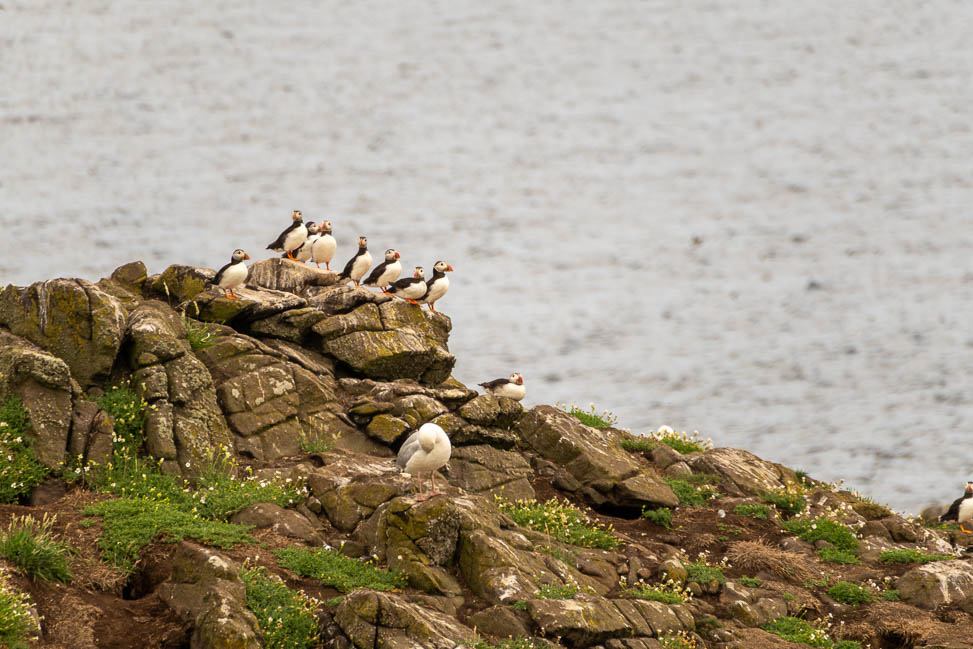
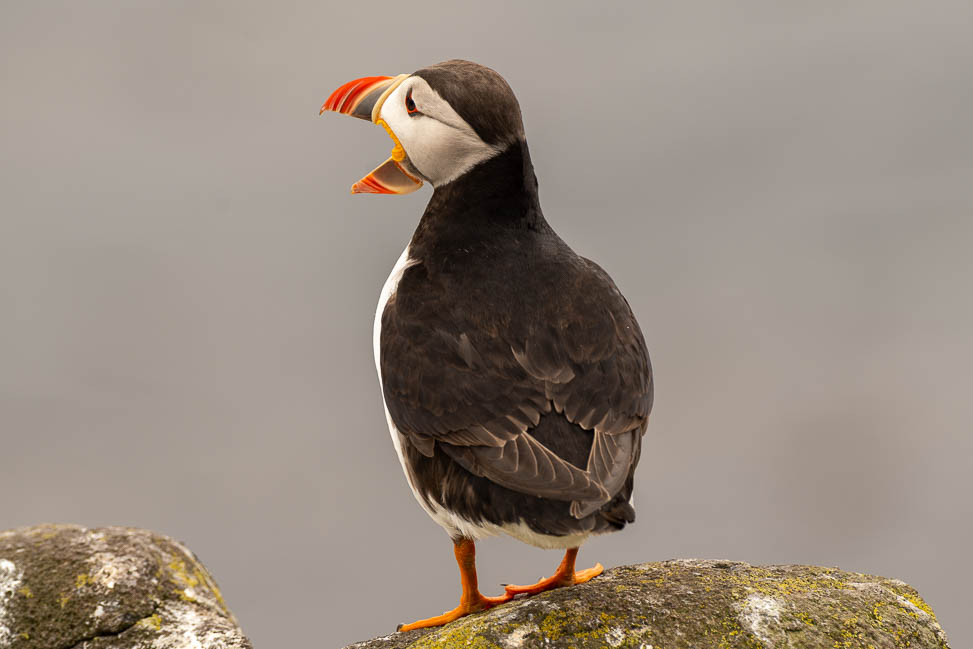
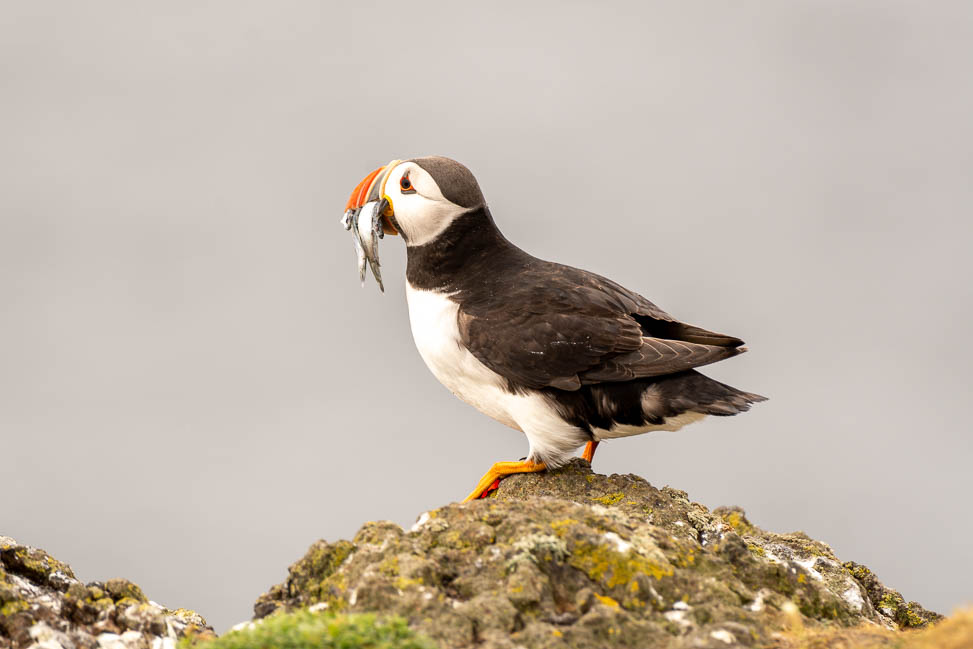
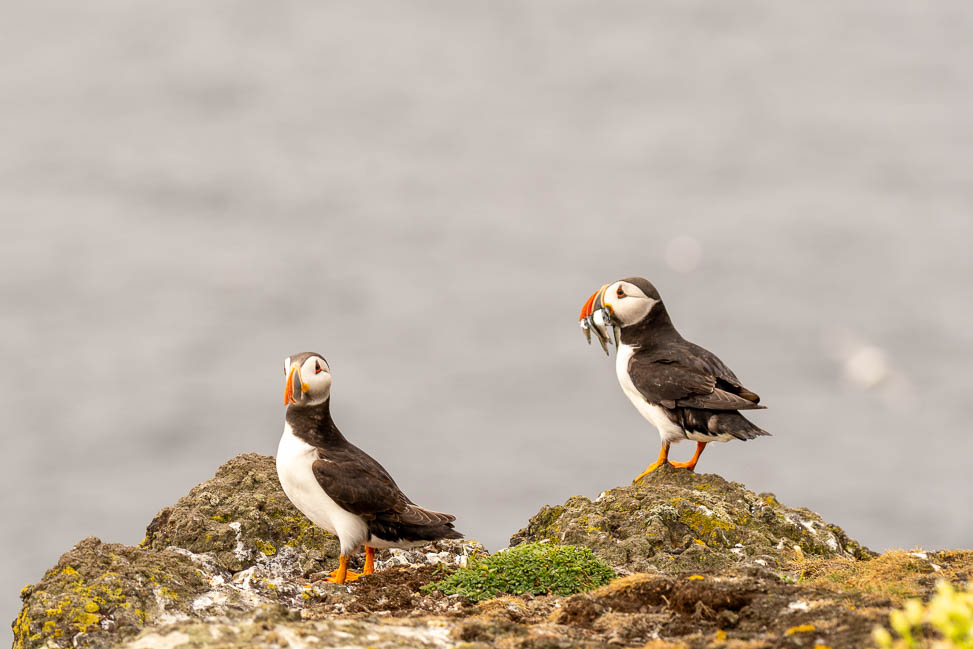
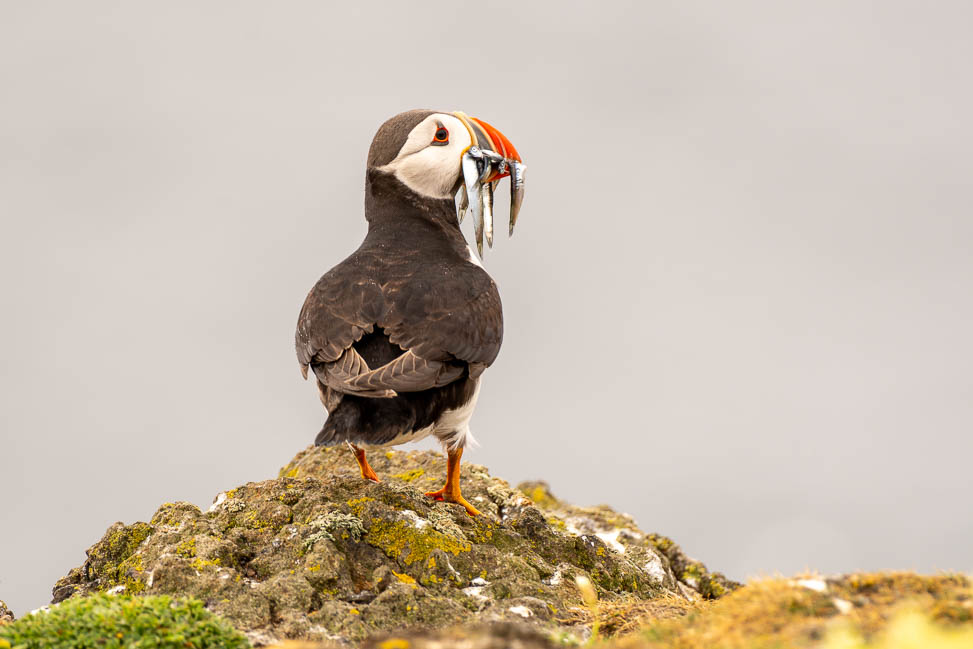
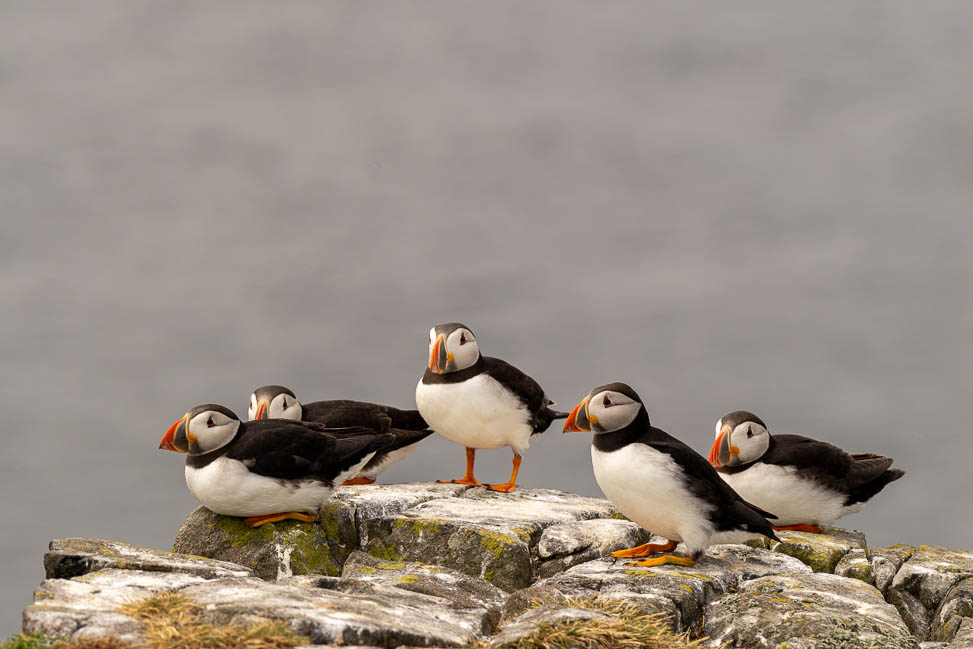
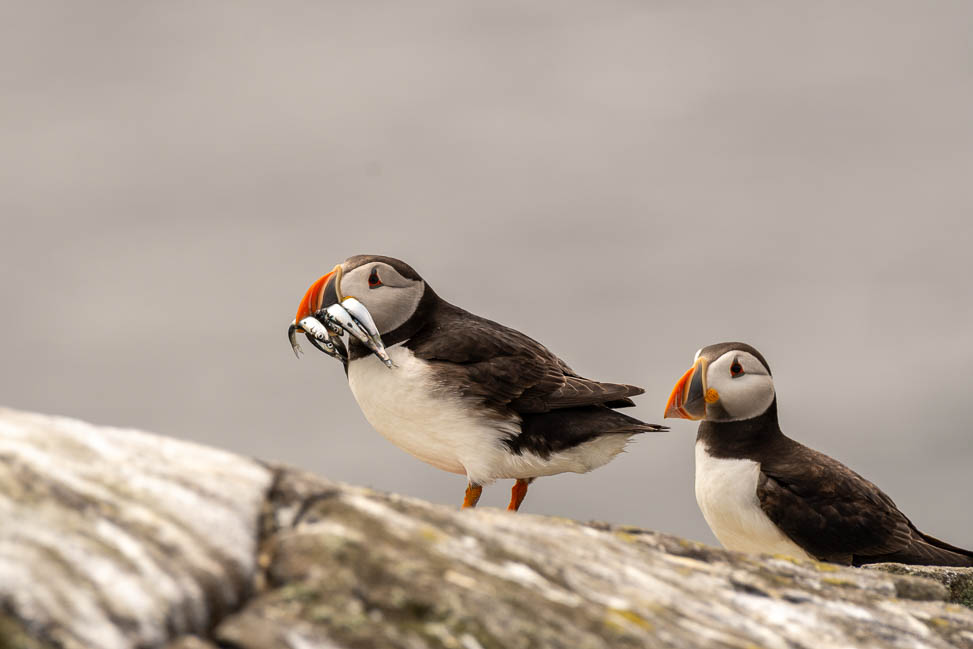
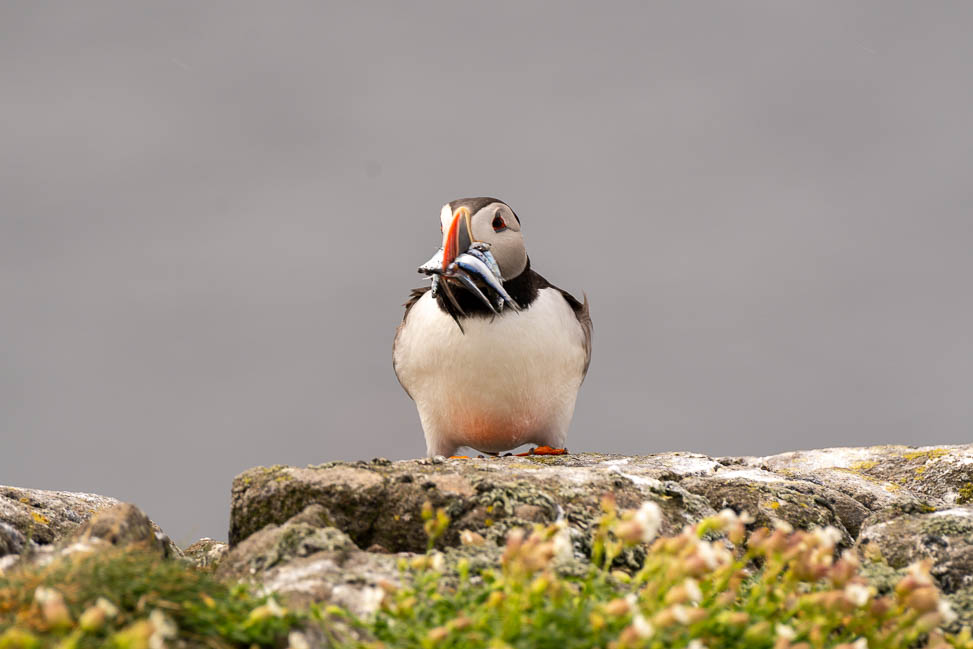
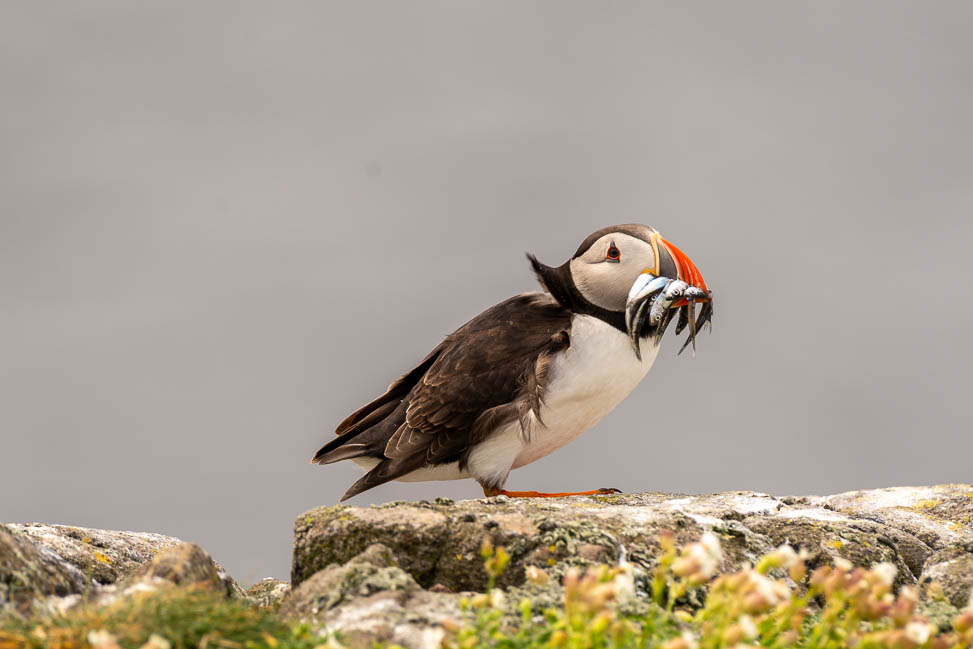
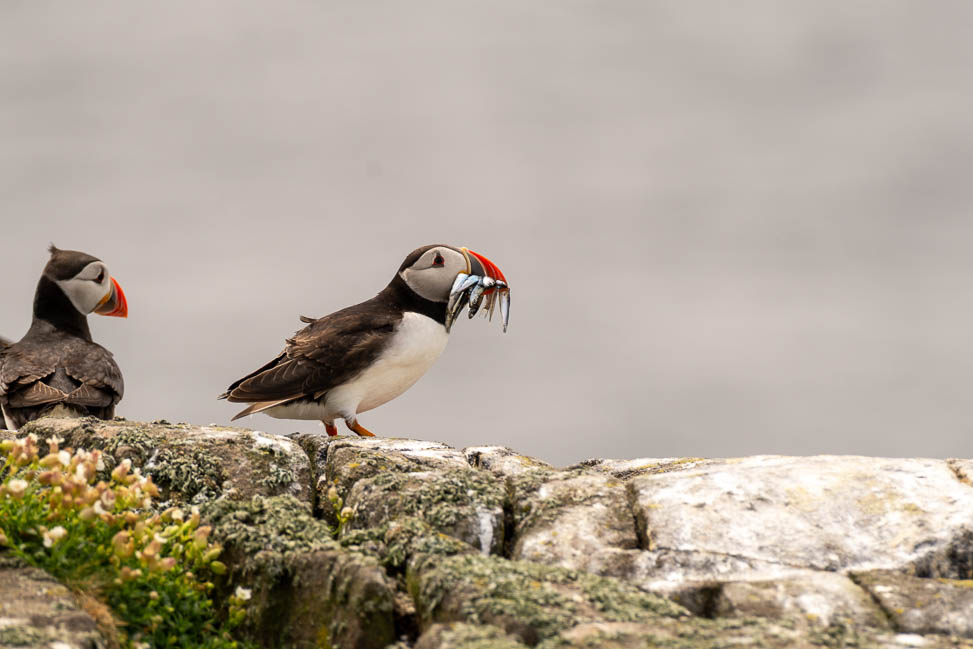
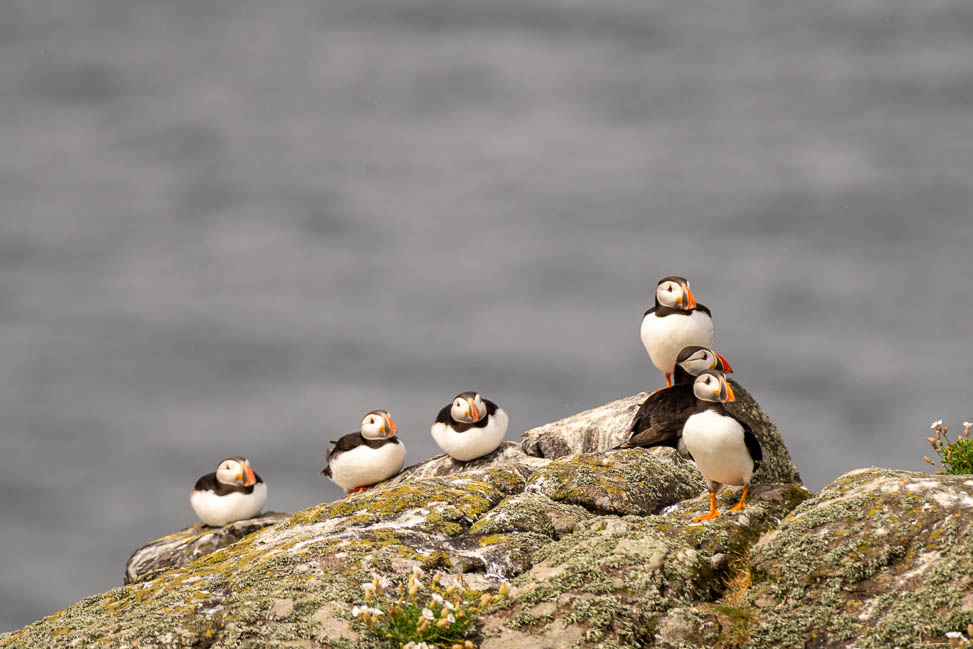
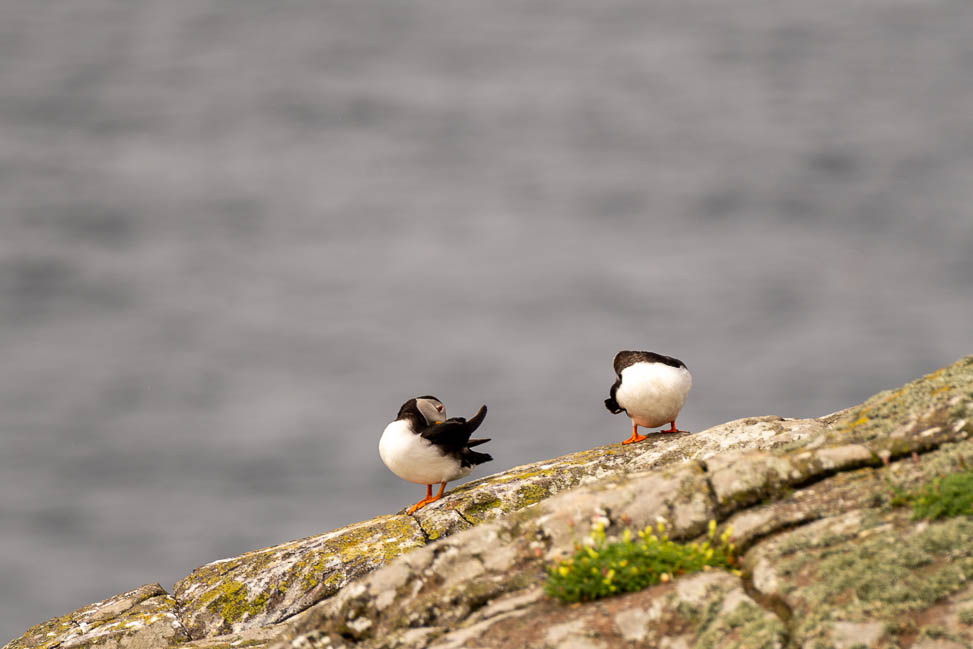
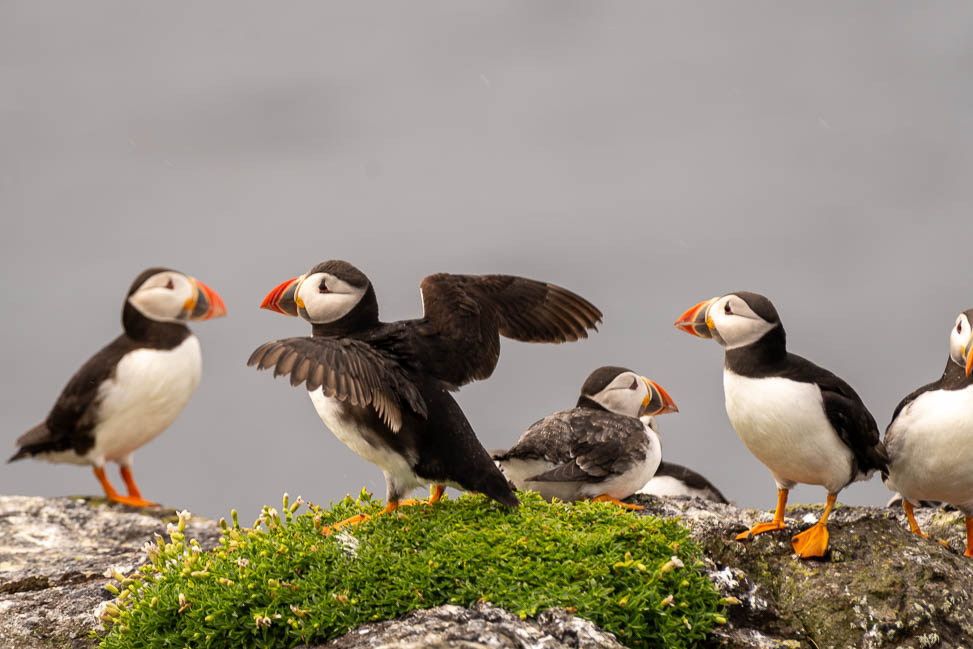
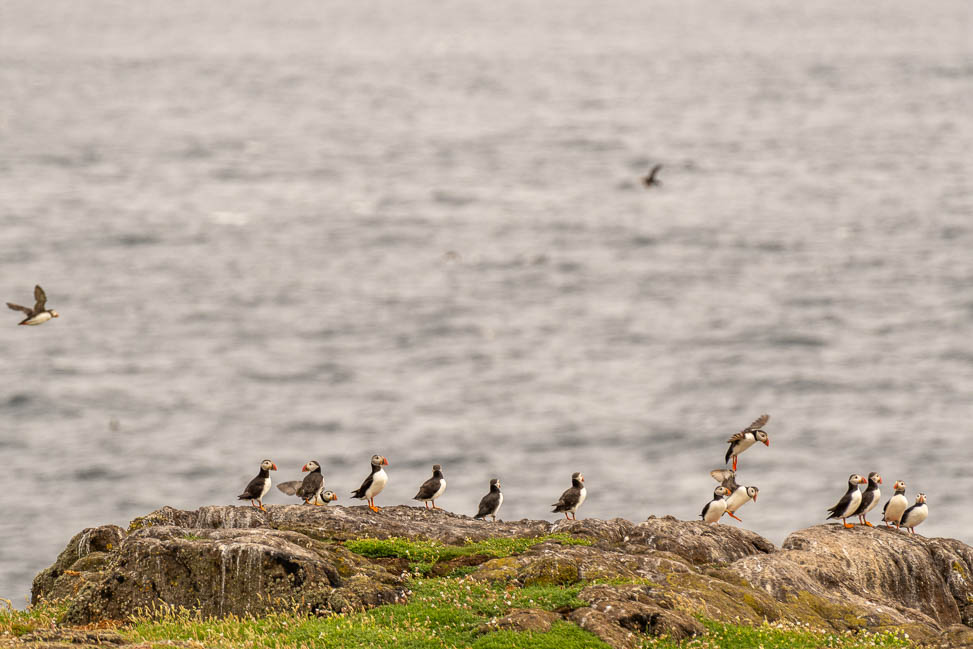
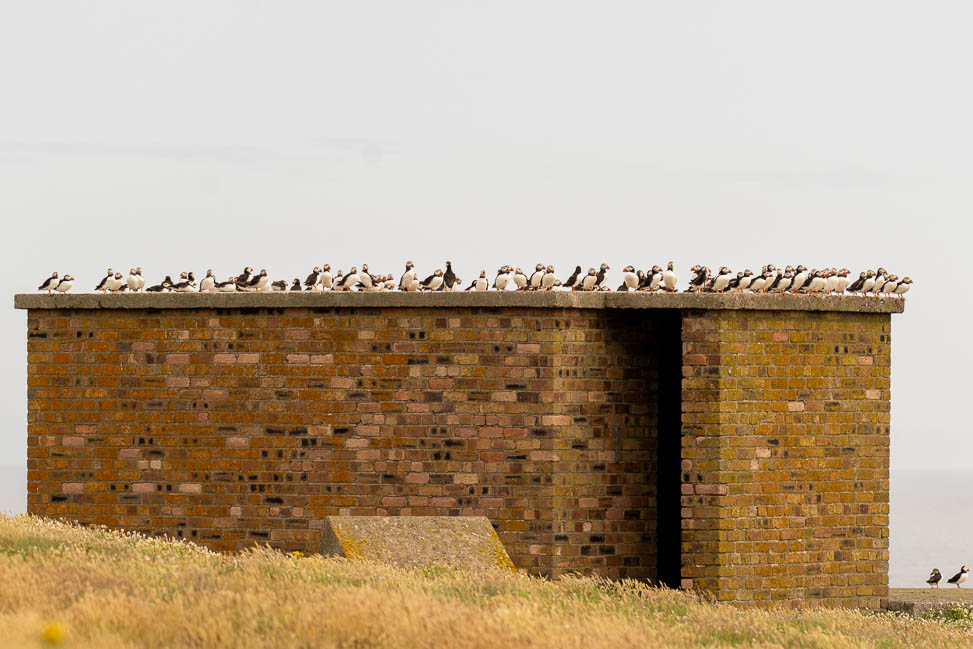
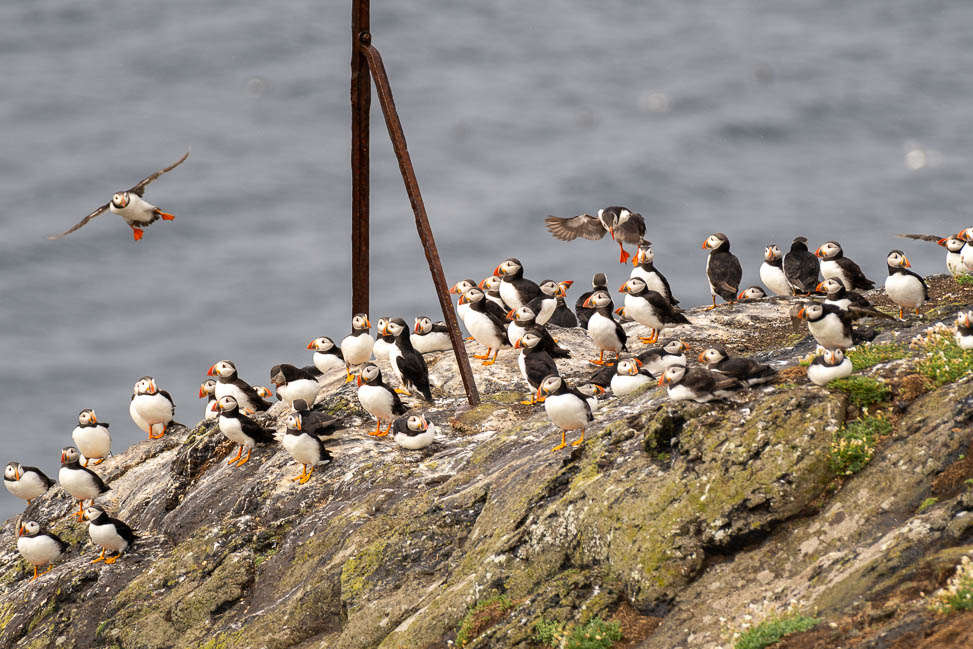
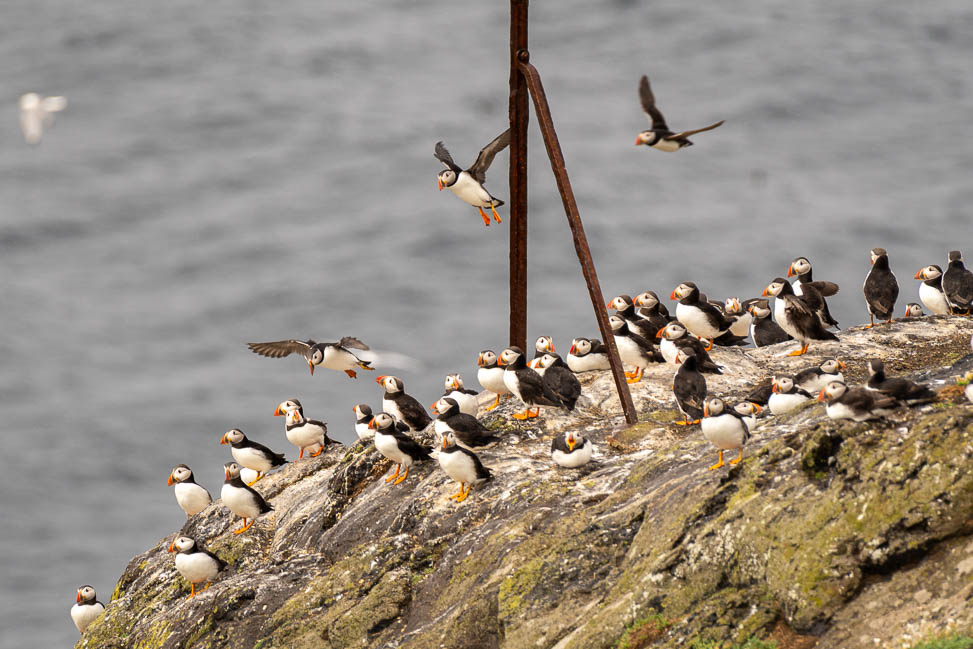
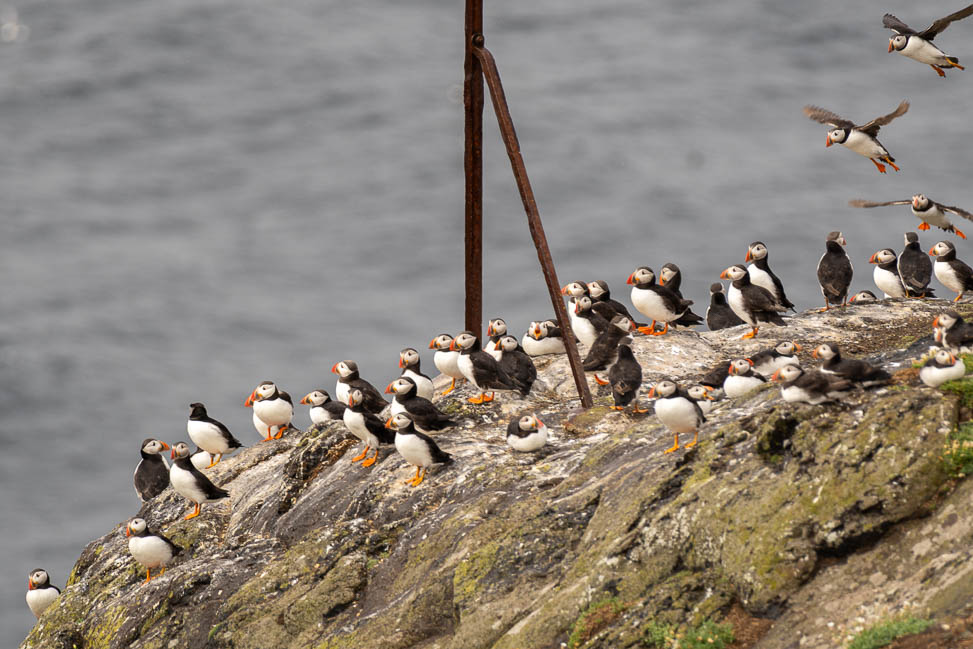
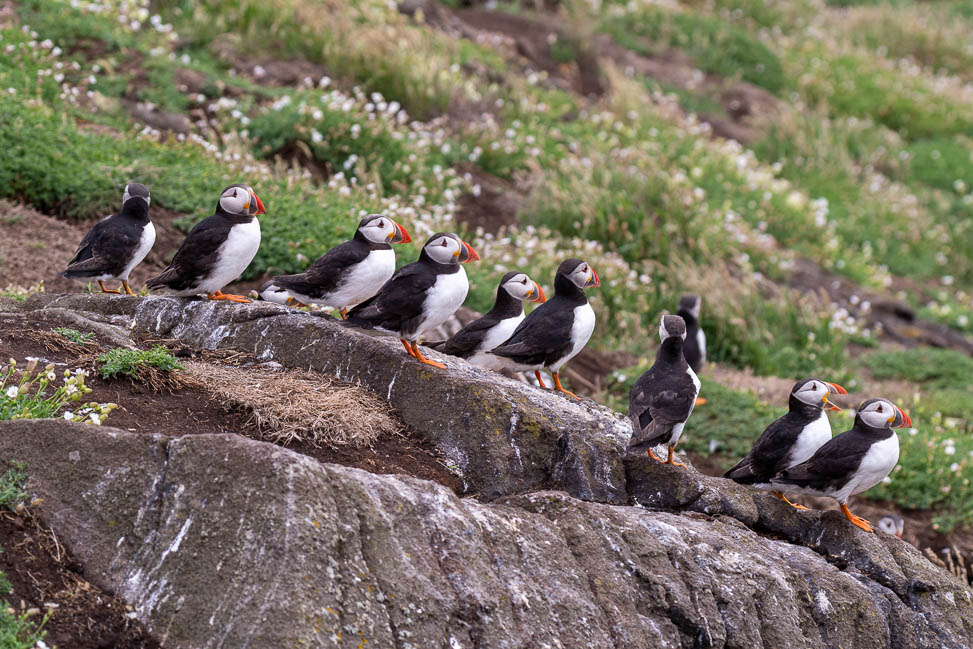
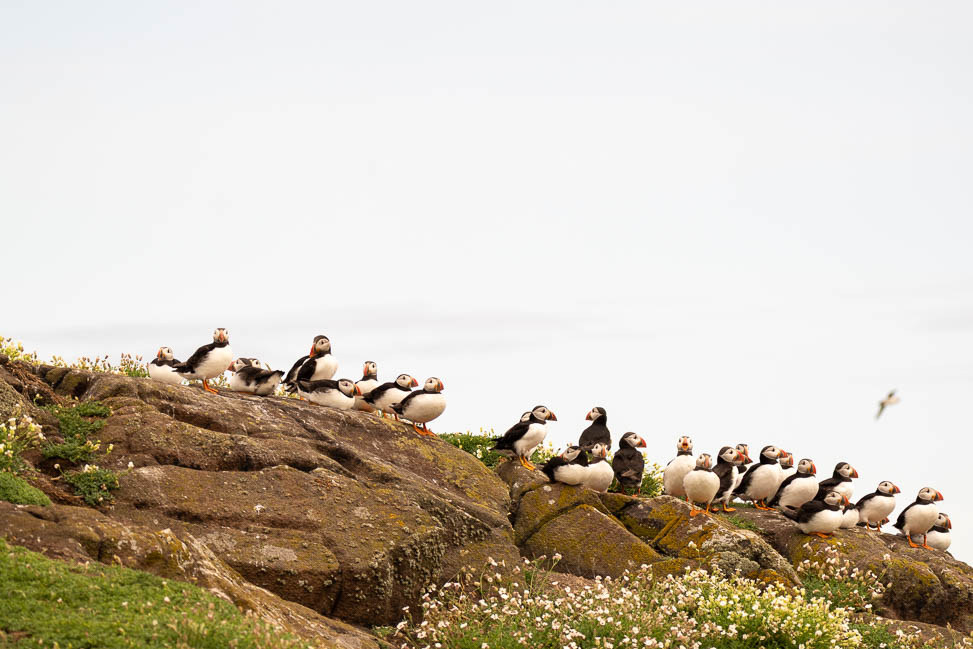
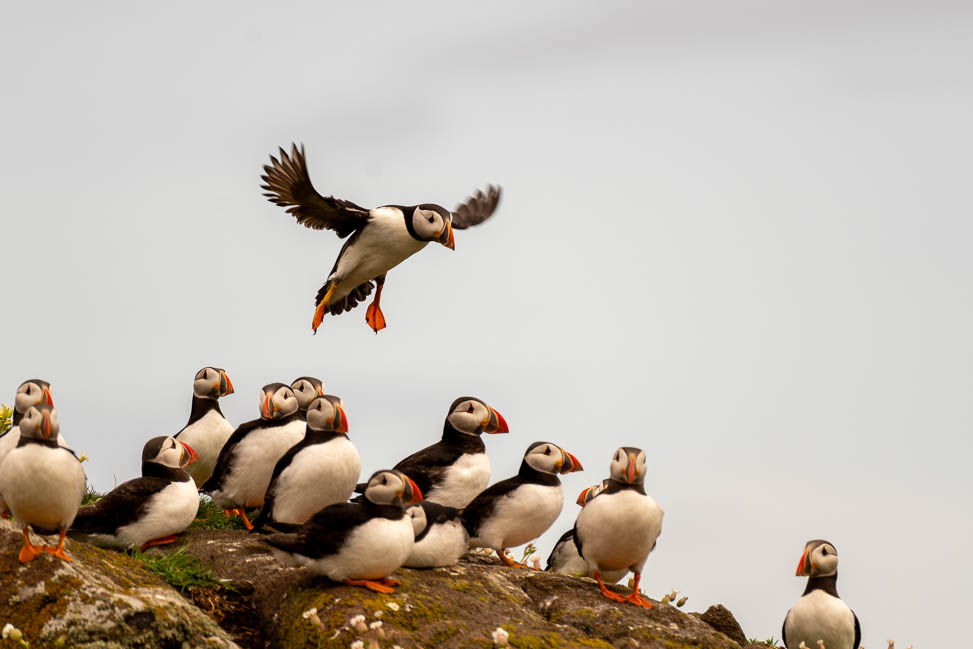
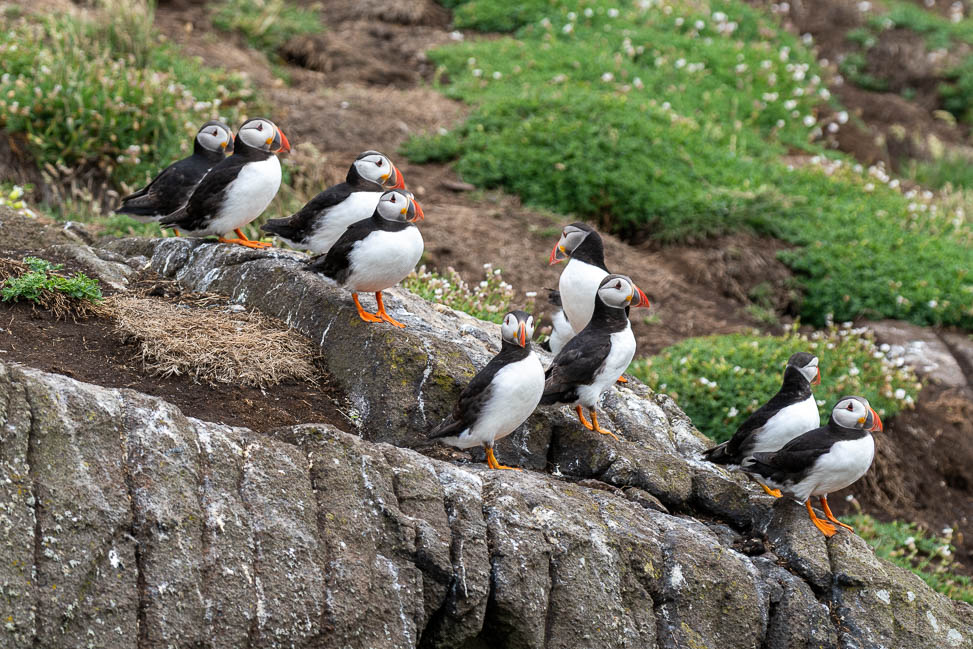
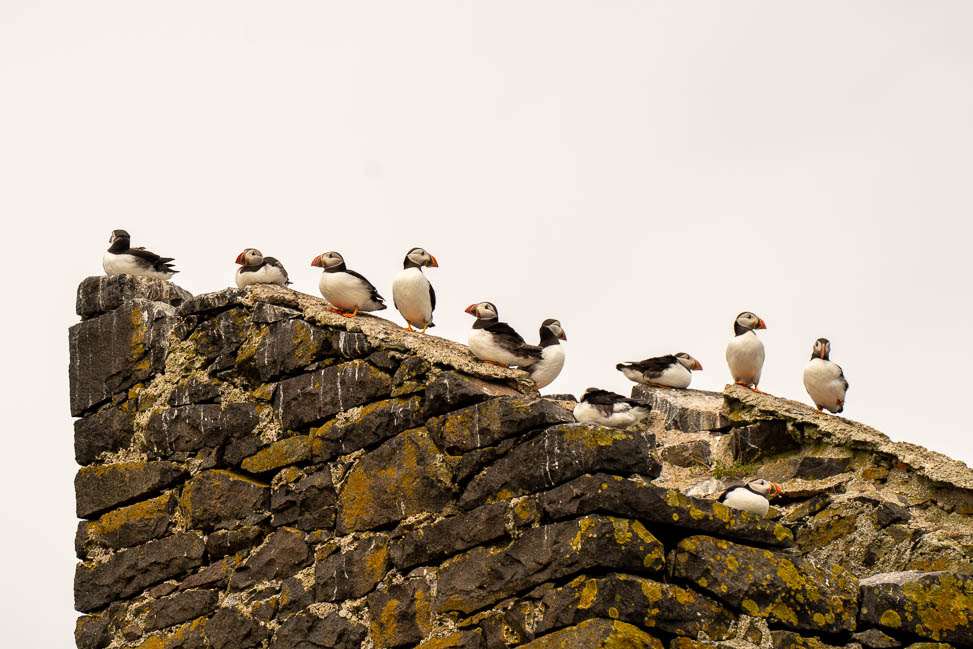
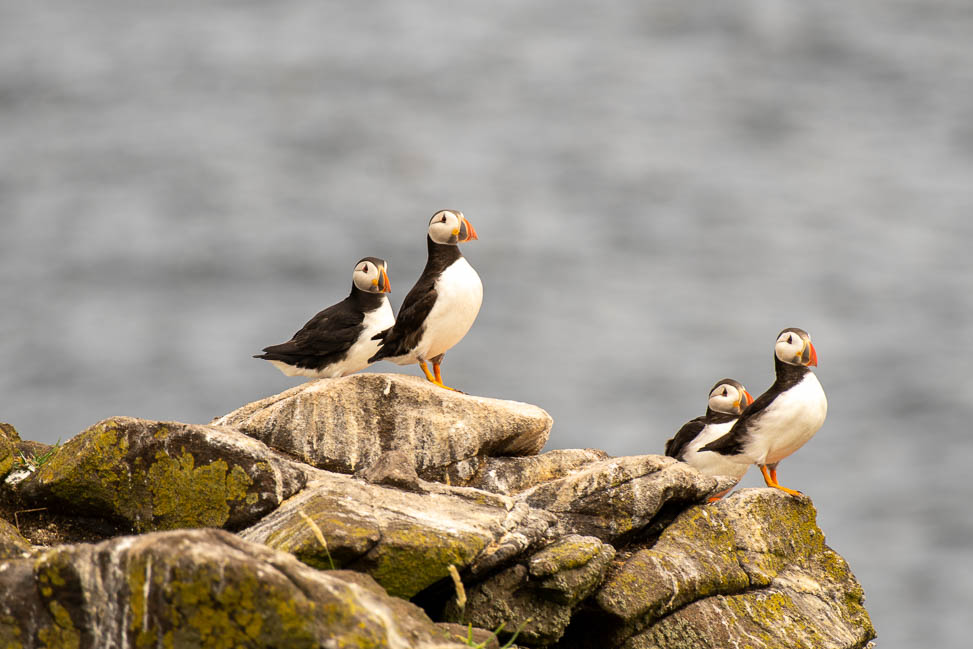
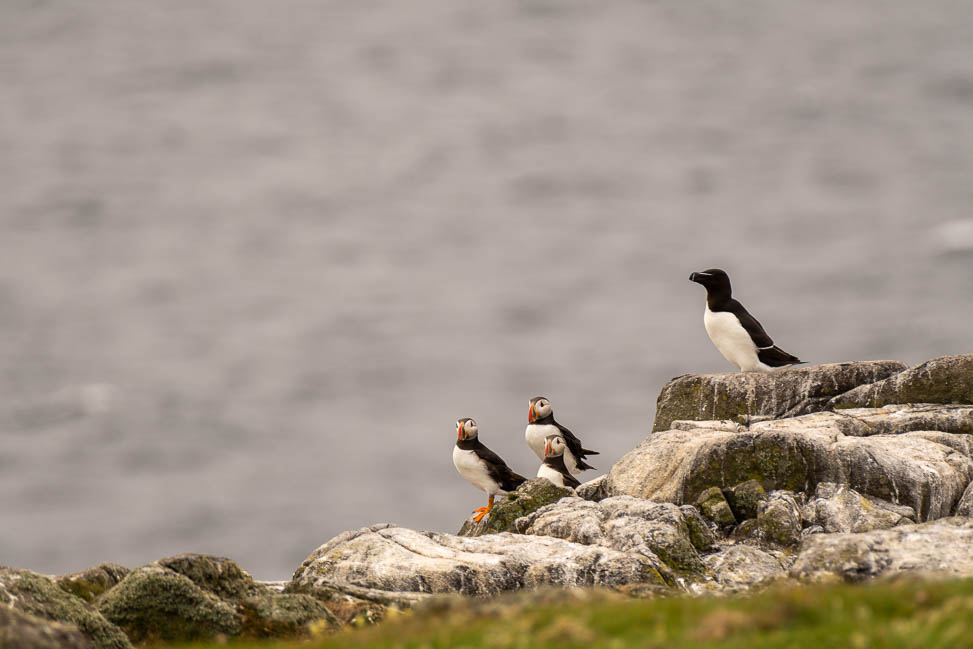
The big draw is the puffins, which are fantastically photogenic birds and very unbothered by the people. That maybe because we keep to well-defined paths. This time I managed to find some that had returned with bills full of sand eels.
Their life cycle is fascinating. A single egg is laid at the end of a burrow and incubated for about 40 days. The puffling hatches, and is fed still in the burrow for about another 40 days. The, at night, it emerges and flutters down to the sea. And that’s it for parental care! It spends the next 3-5 years out at sea, finally returning to find a mate and a burrow. They mate for life and often live for 20-30 years.
Gannets
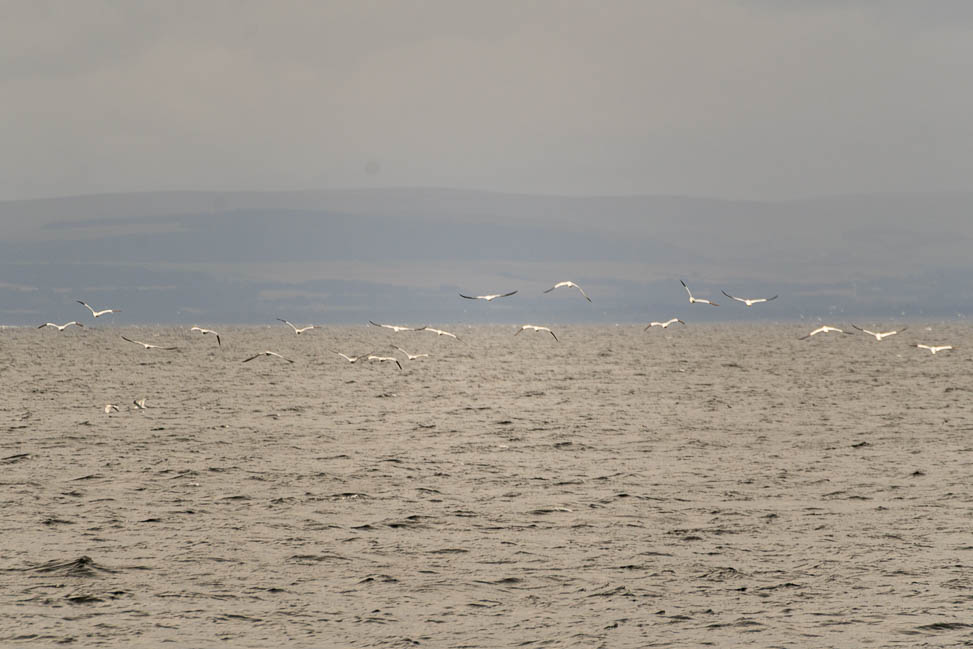
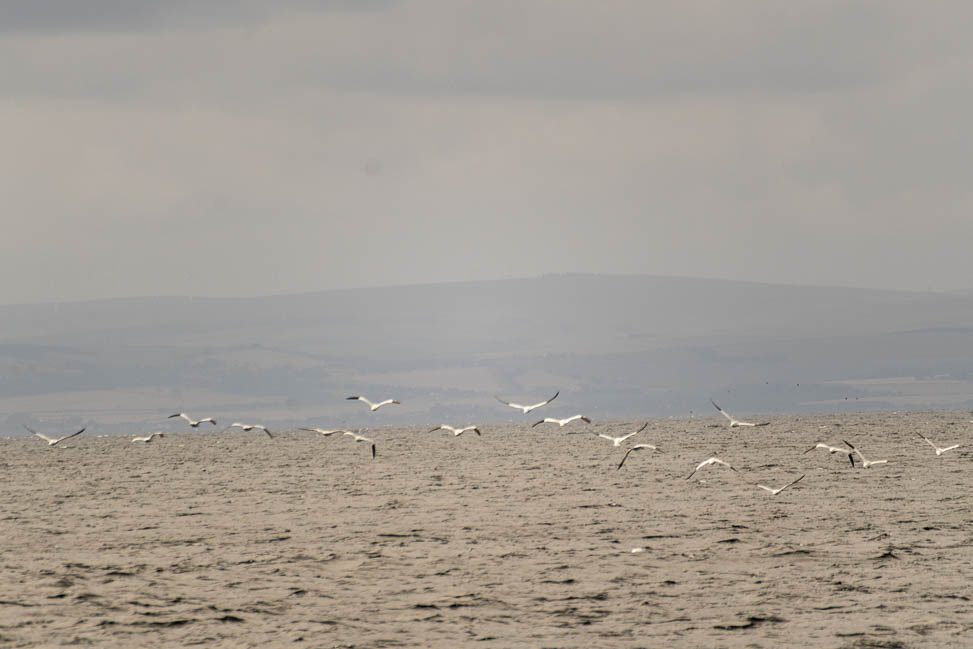
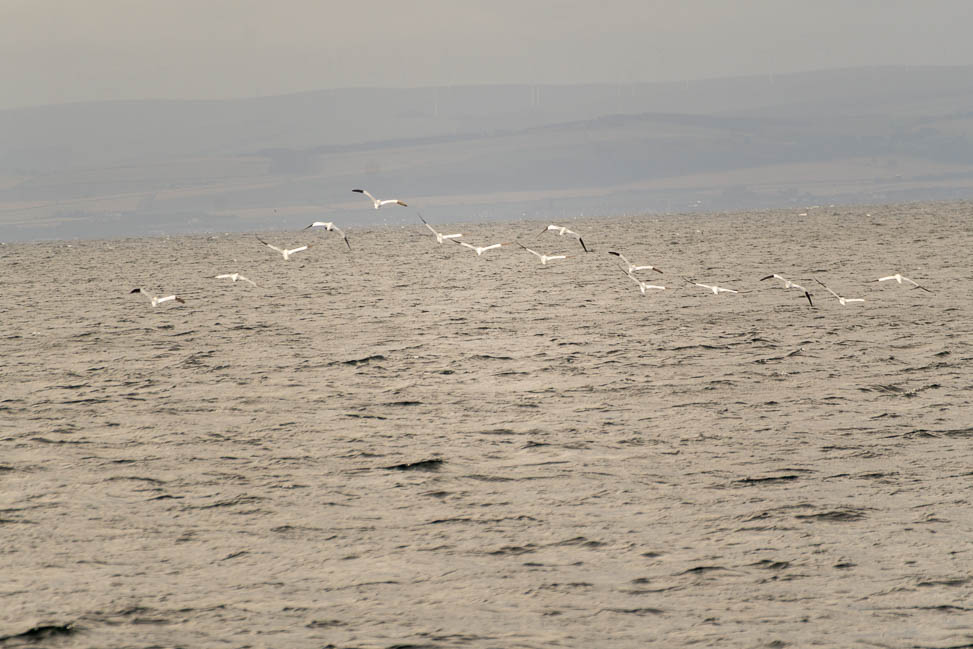
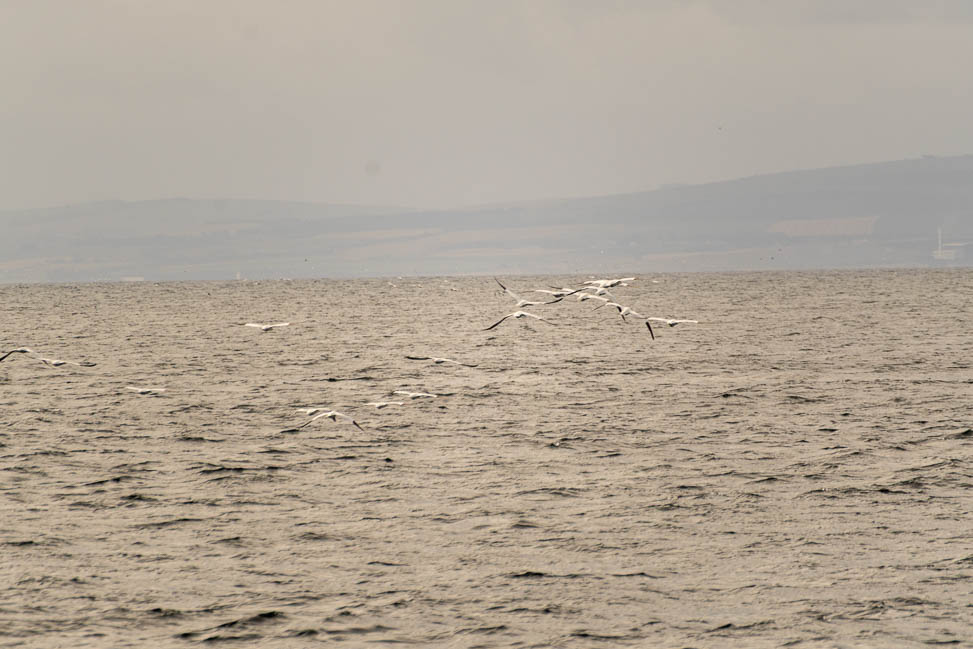
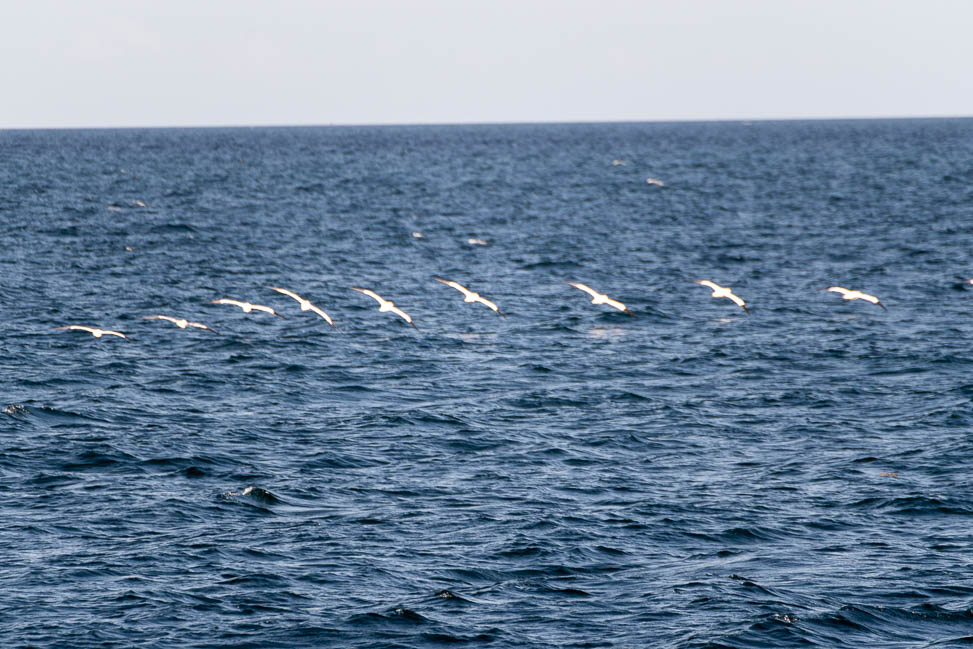
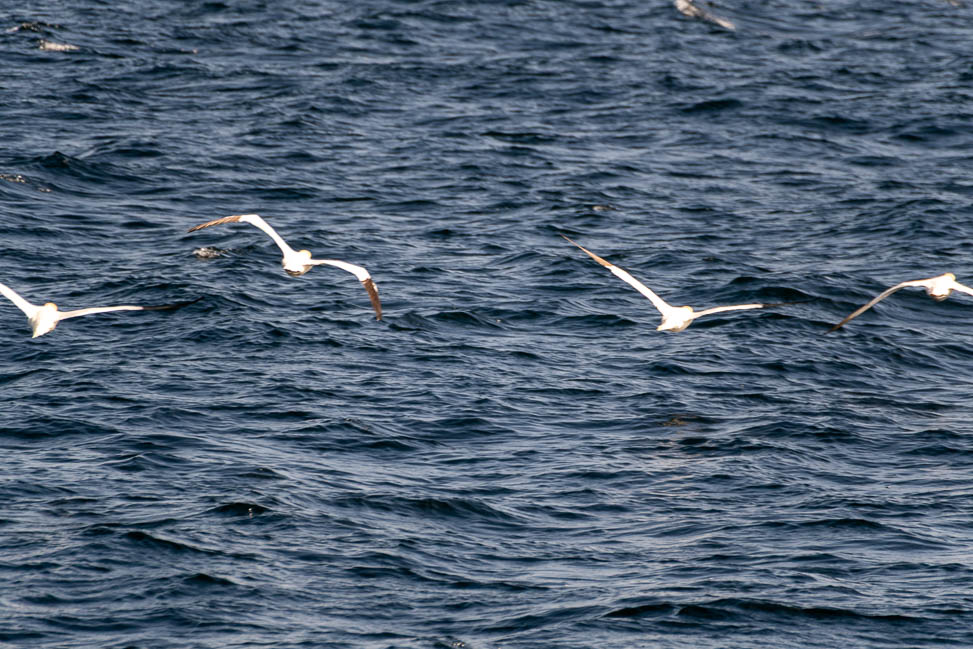
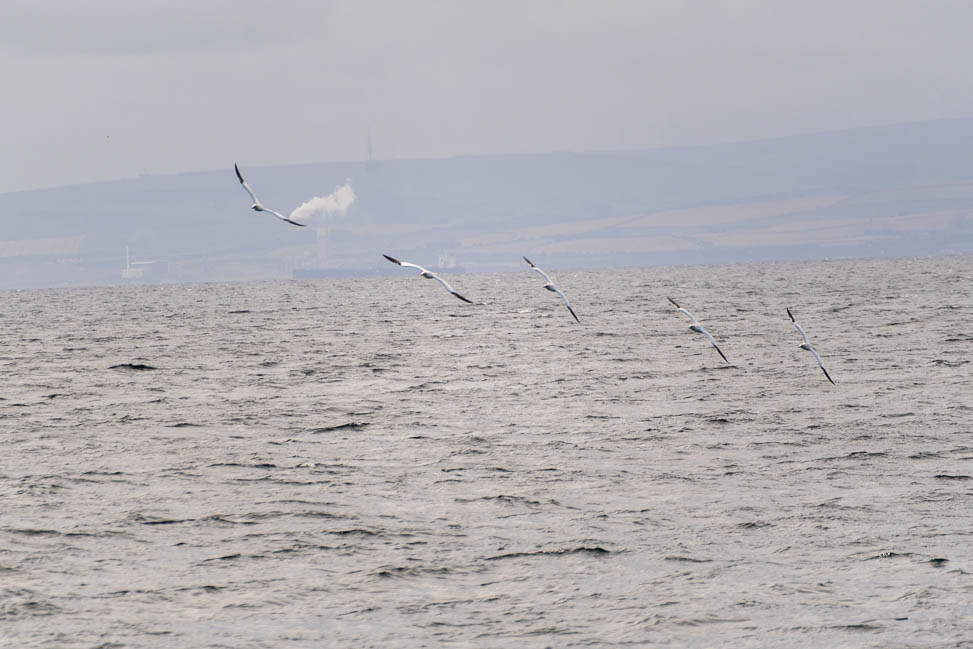
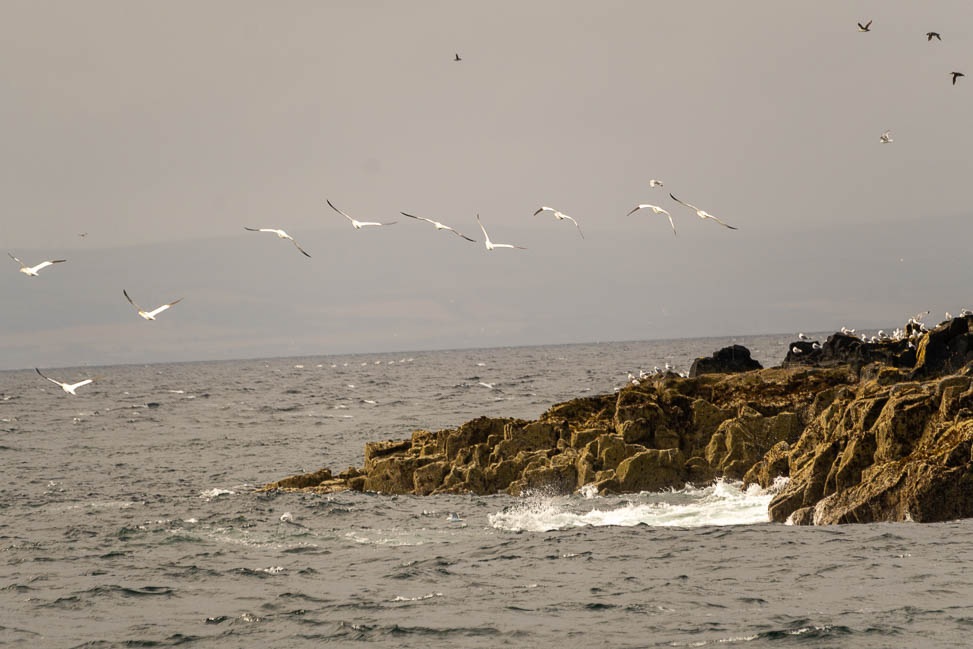
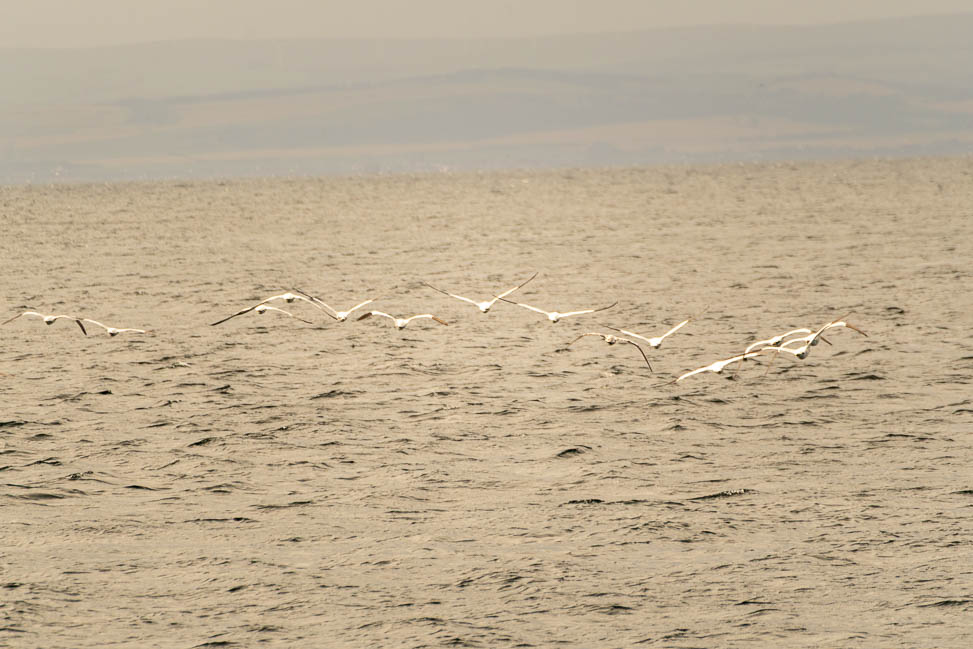
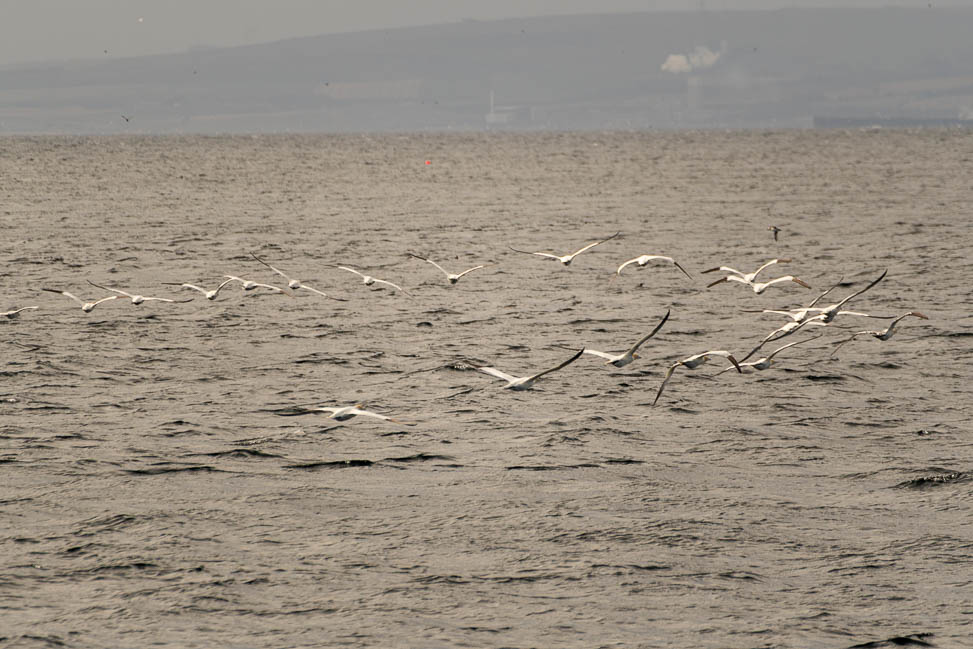
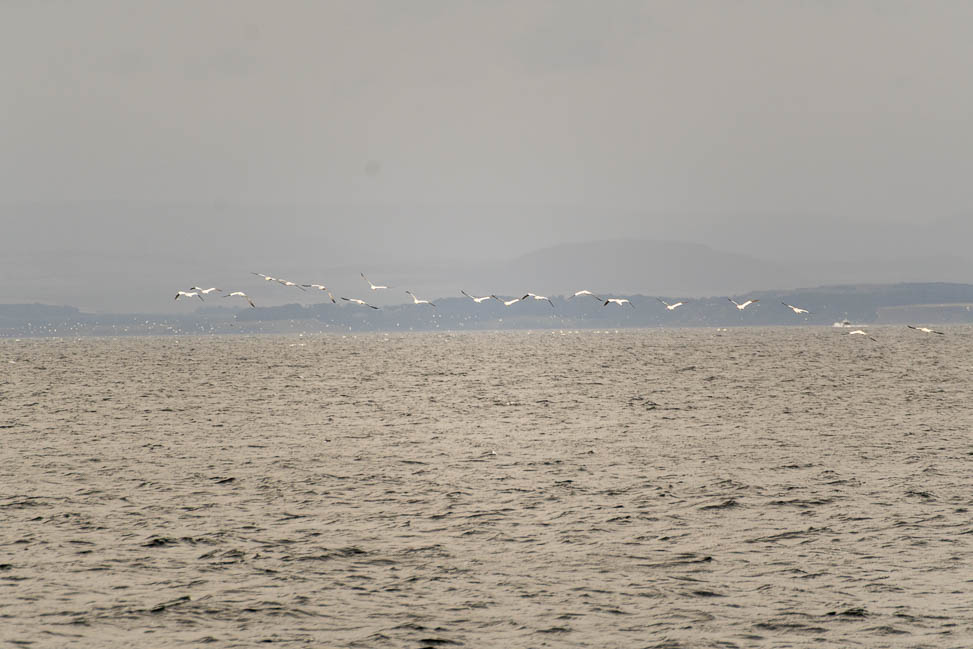
We saw lots of of strings of gannets flying from Bass Rock to their feeding grounds. These birds were badly affected by bird flu, but because young birds stay at sea for 2-3 years it wasn’t quite the disaster it might have been. I have seen them fishing over on Loch Long, and their plunging into the water is spectacular.
Other species
As well as these two iconic species I also took photos of:
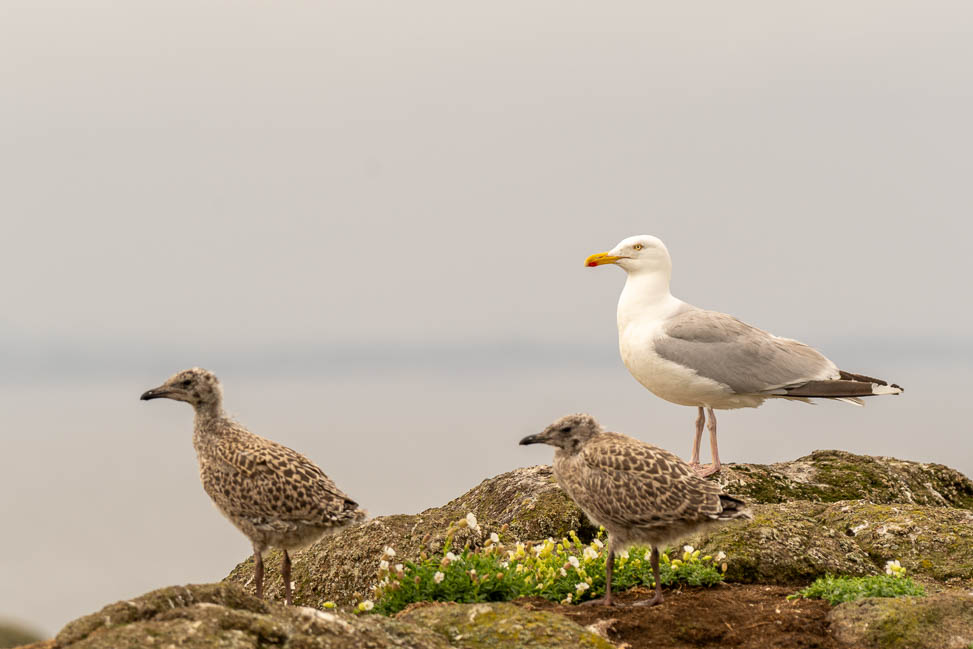
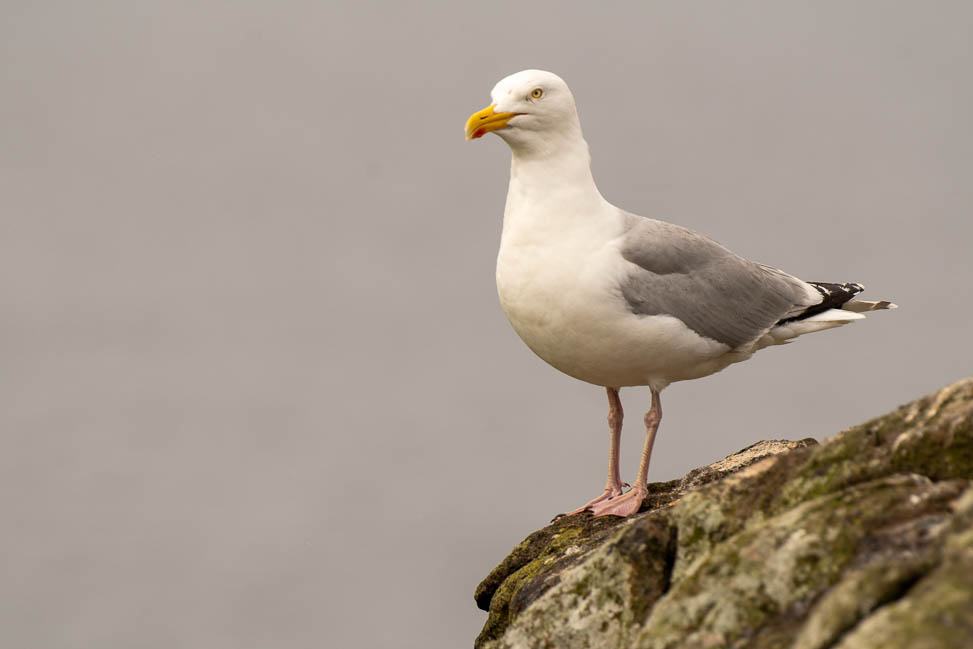
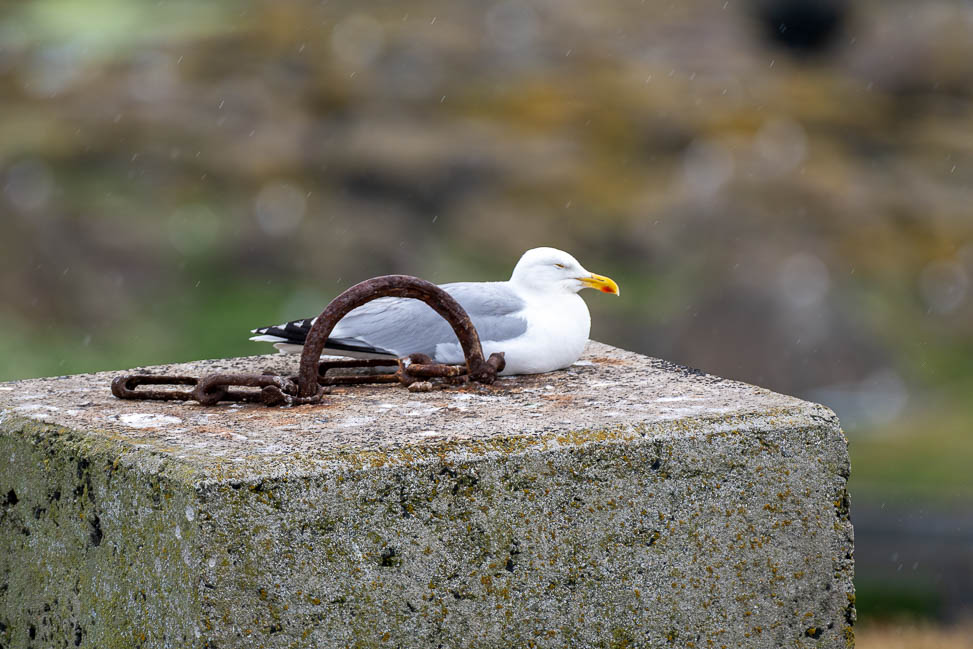
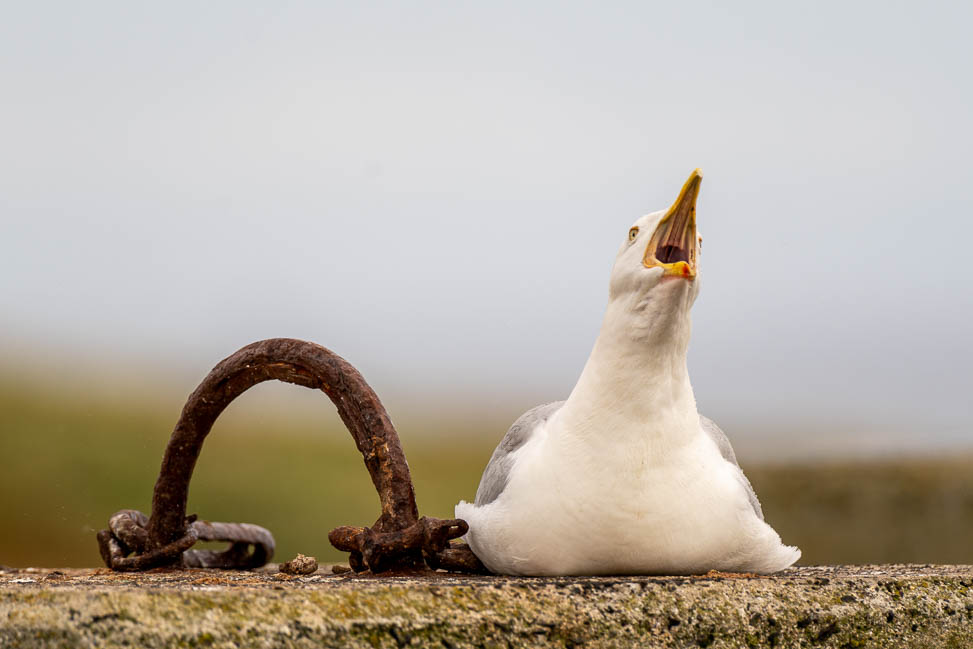
- Herring Gull. Grey back, yellow beak with red spot, pink legs
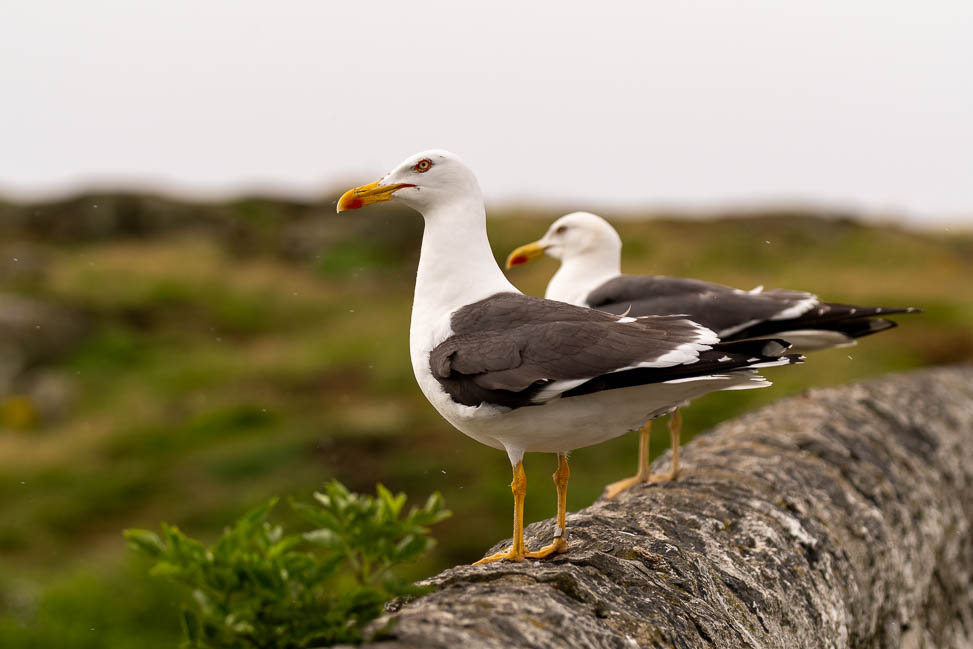
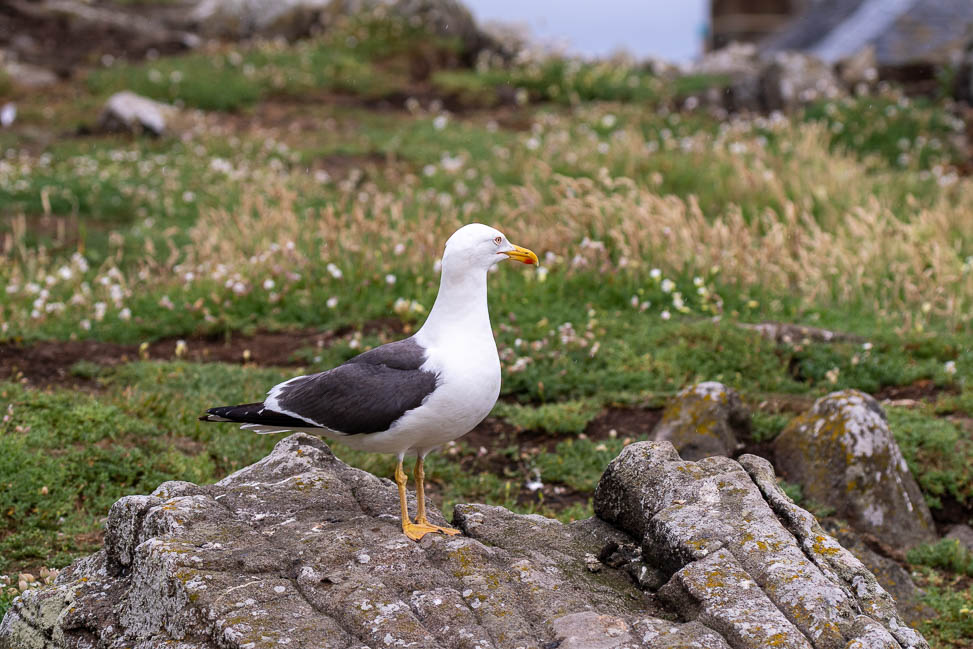
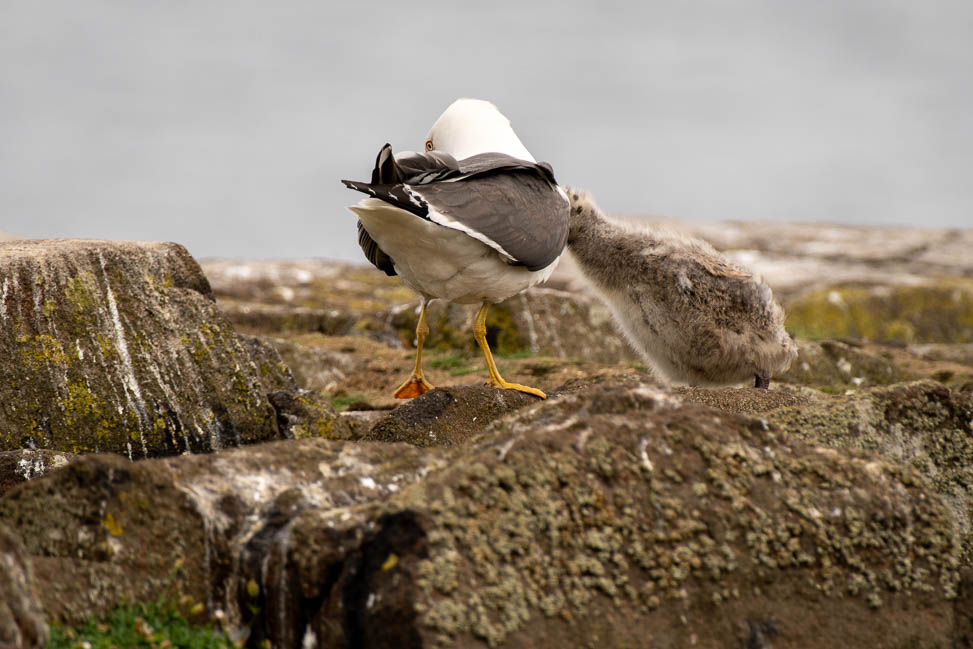
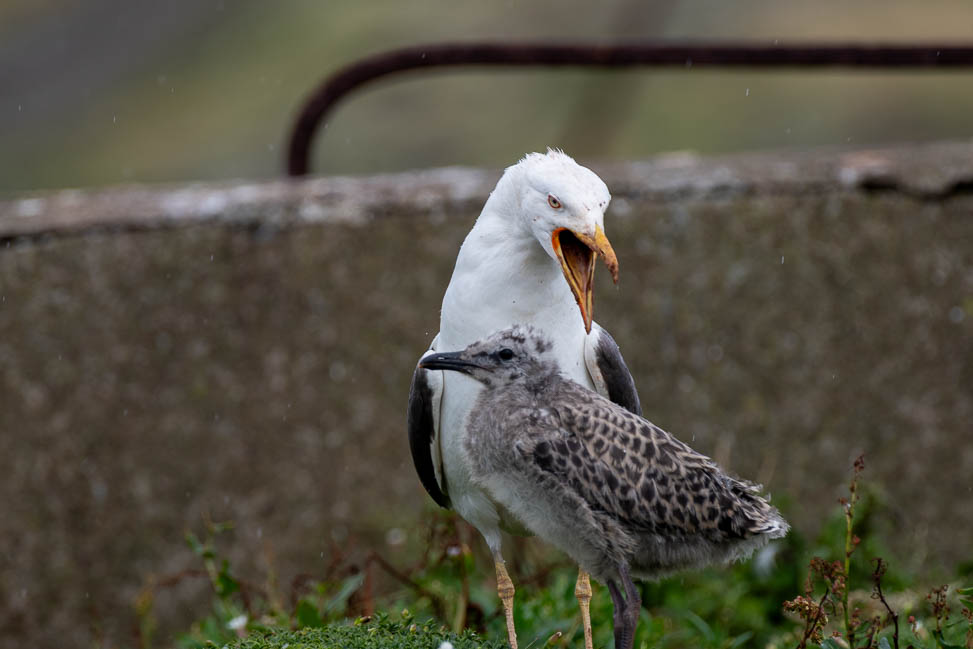
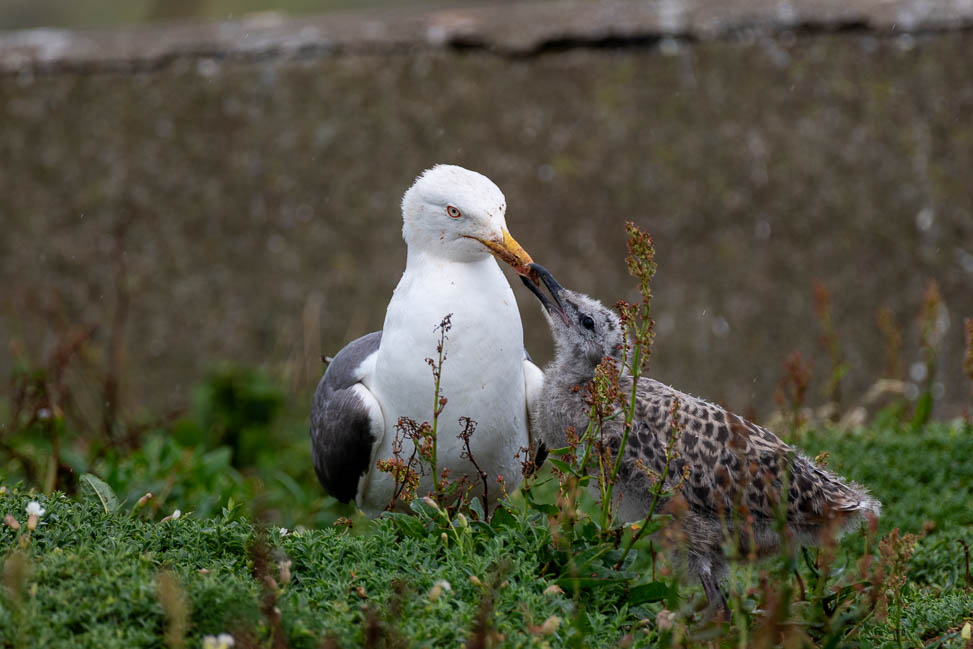
- Lesser Black Back gull. Black back, yellow beak with red spot, yellow legs
- Greater Black Back gull. Black back, yellow beak with red spot, pink legs
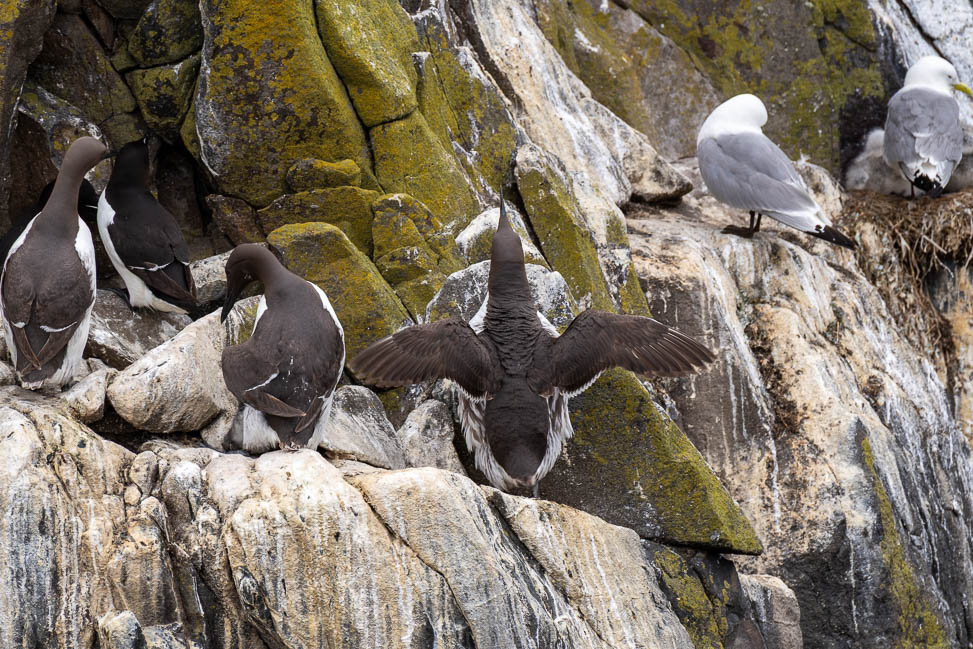
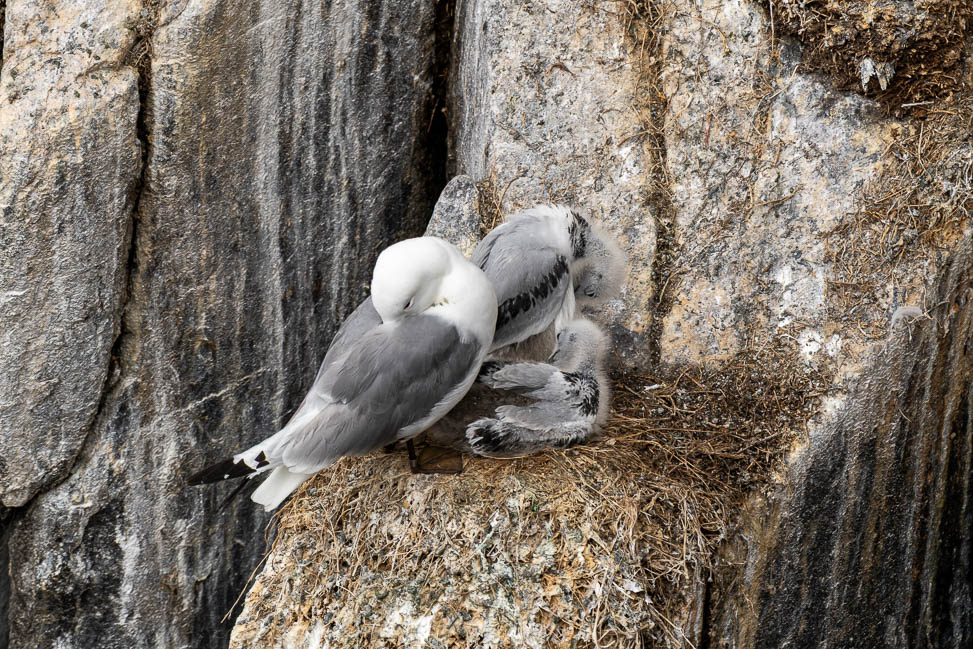
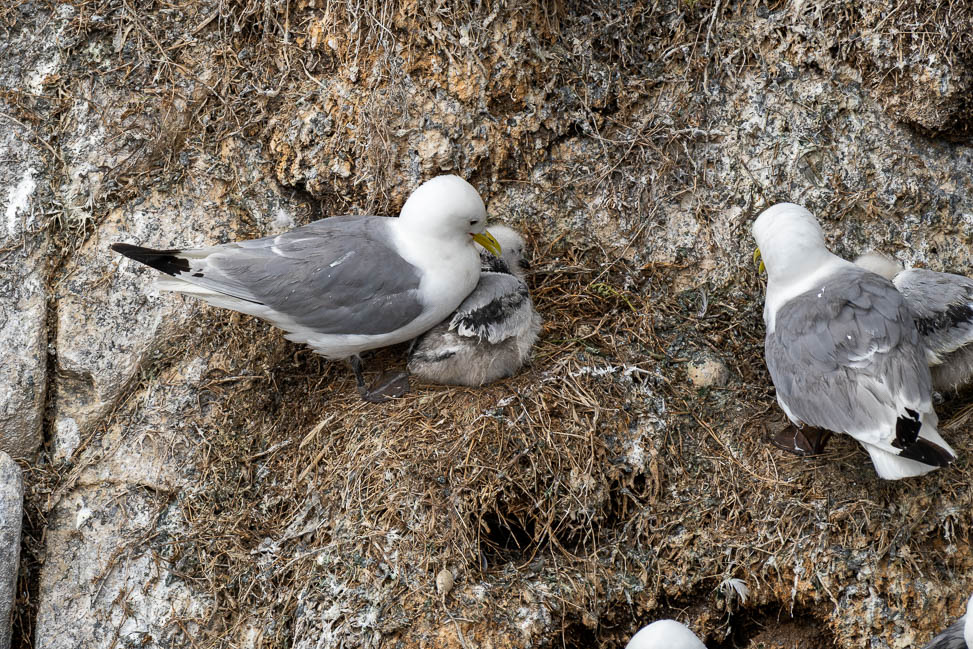
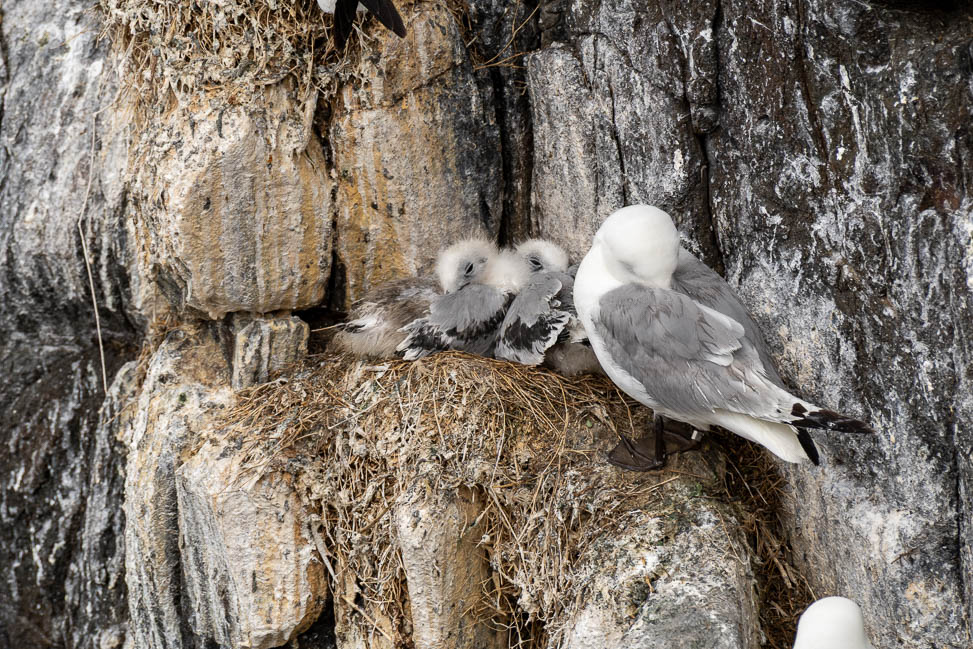
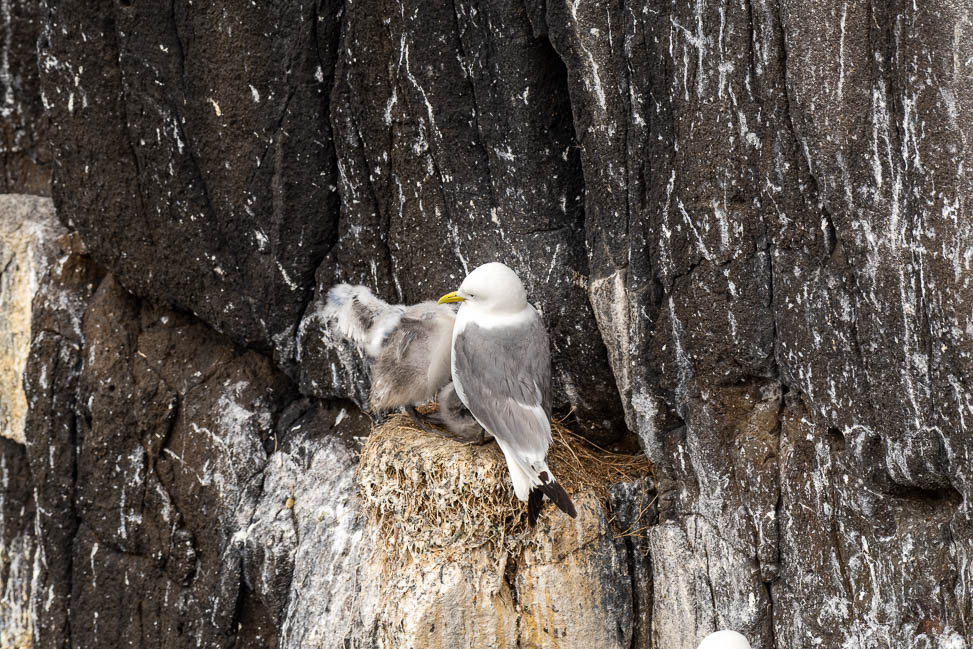
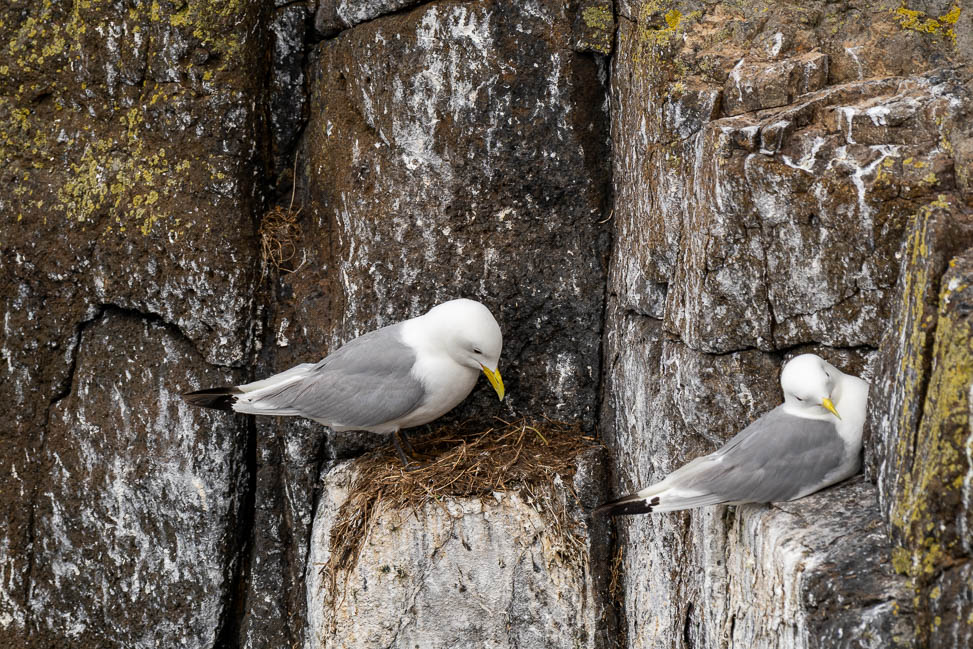
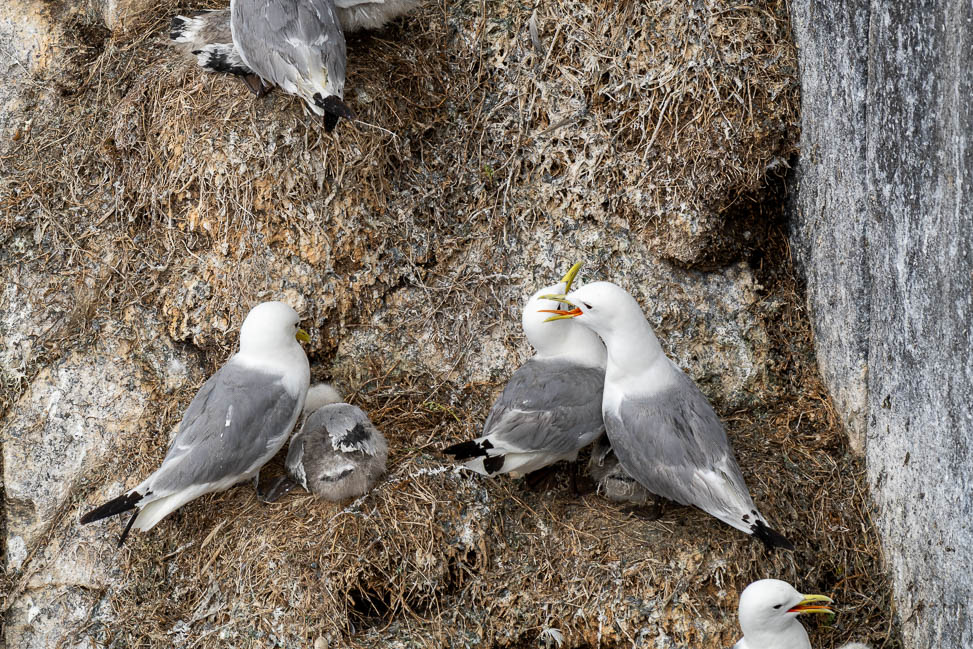
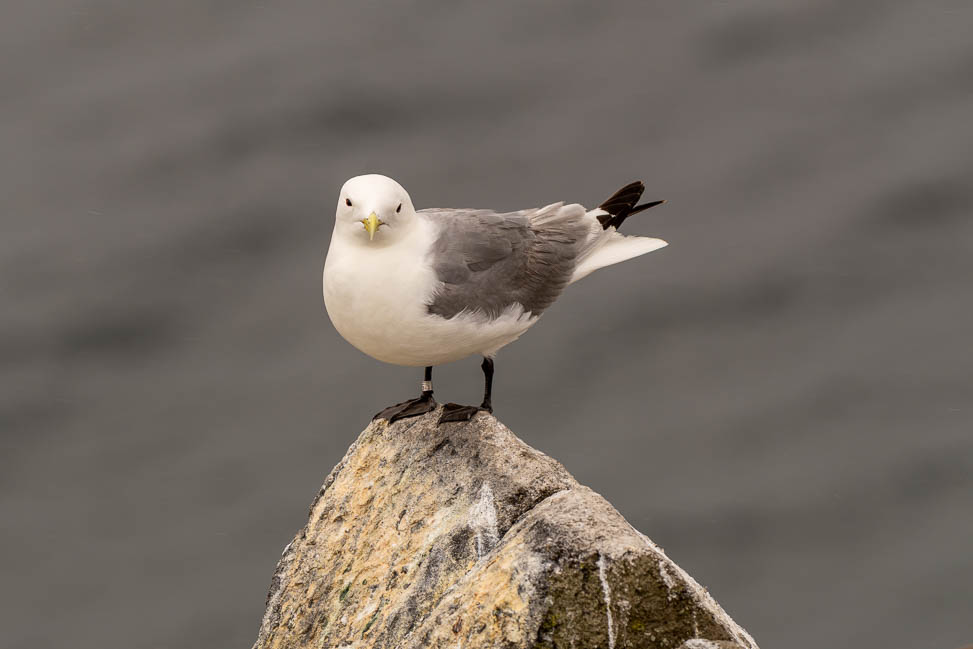
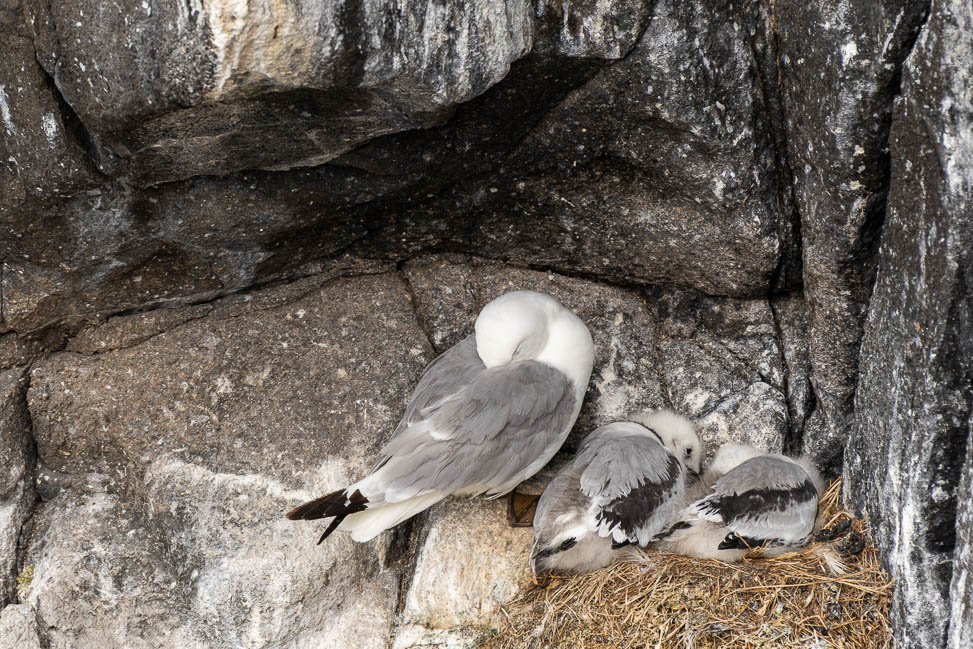
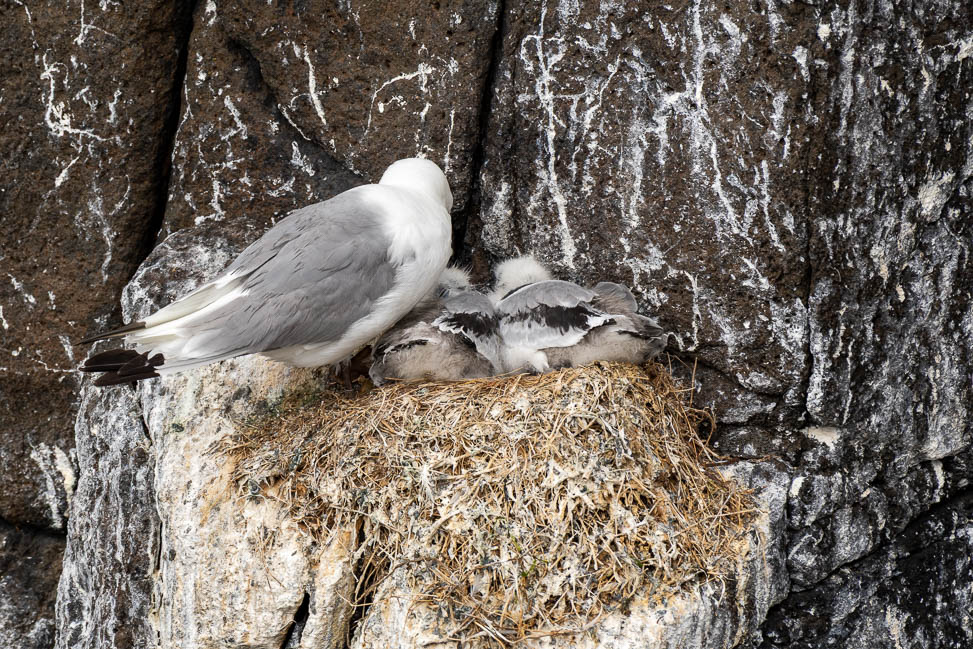
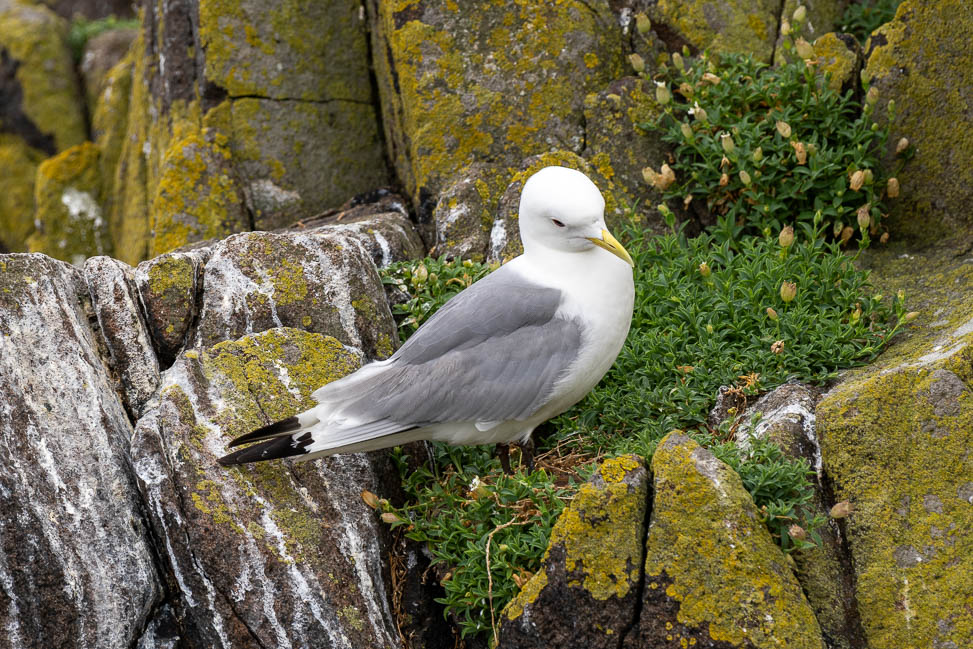
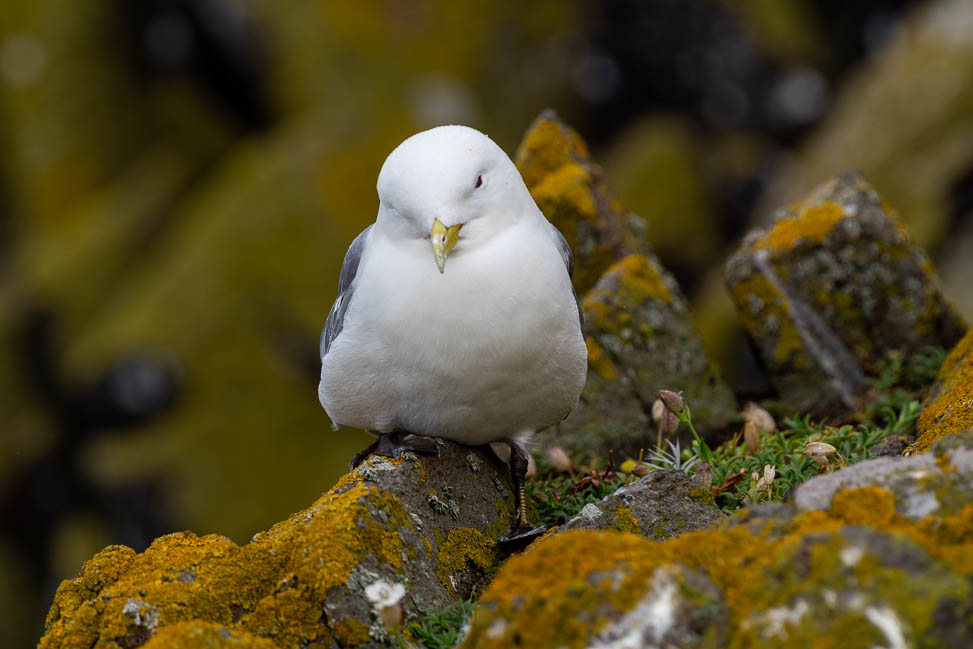
- Kittywake. Grey back, black legs
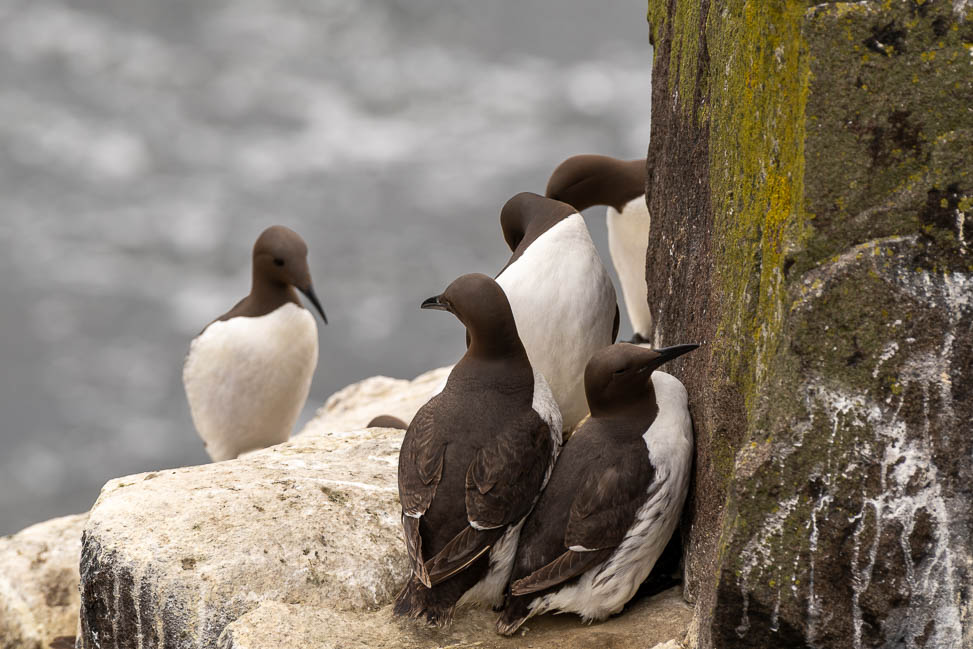
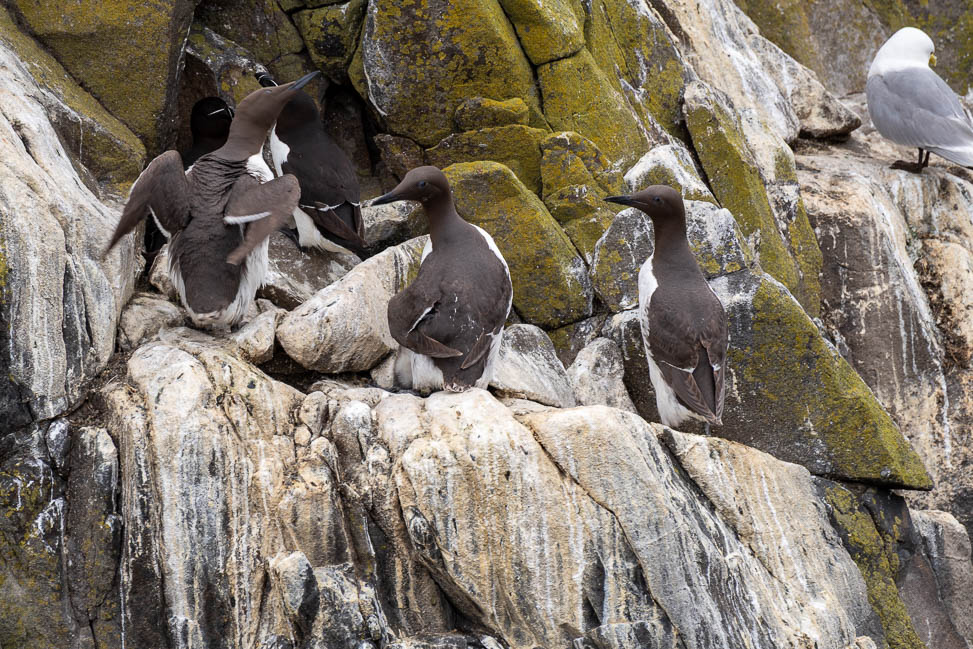
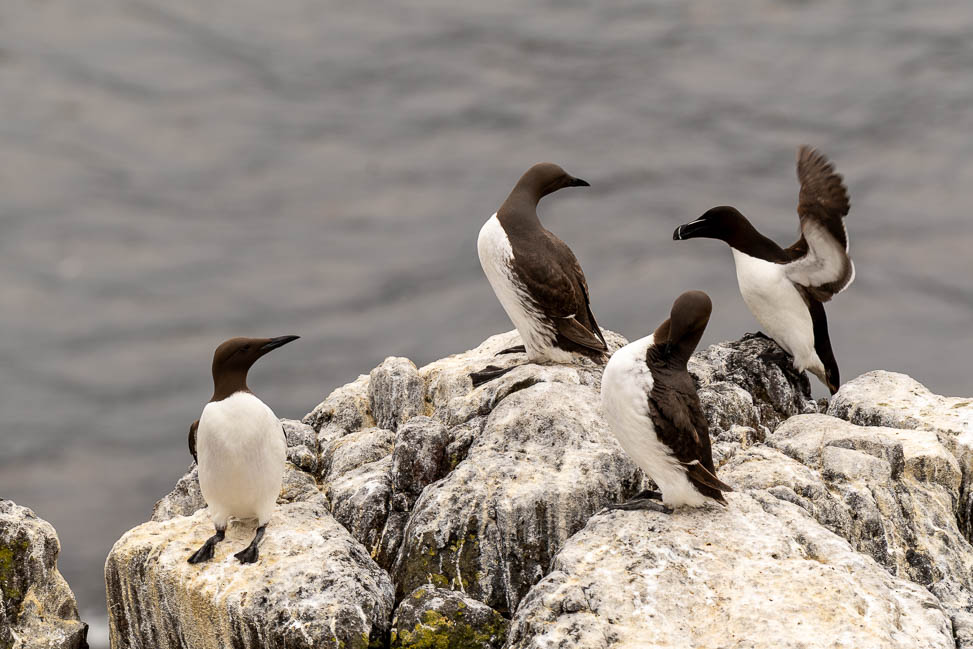
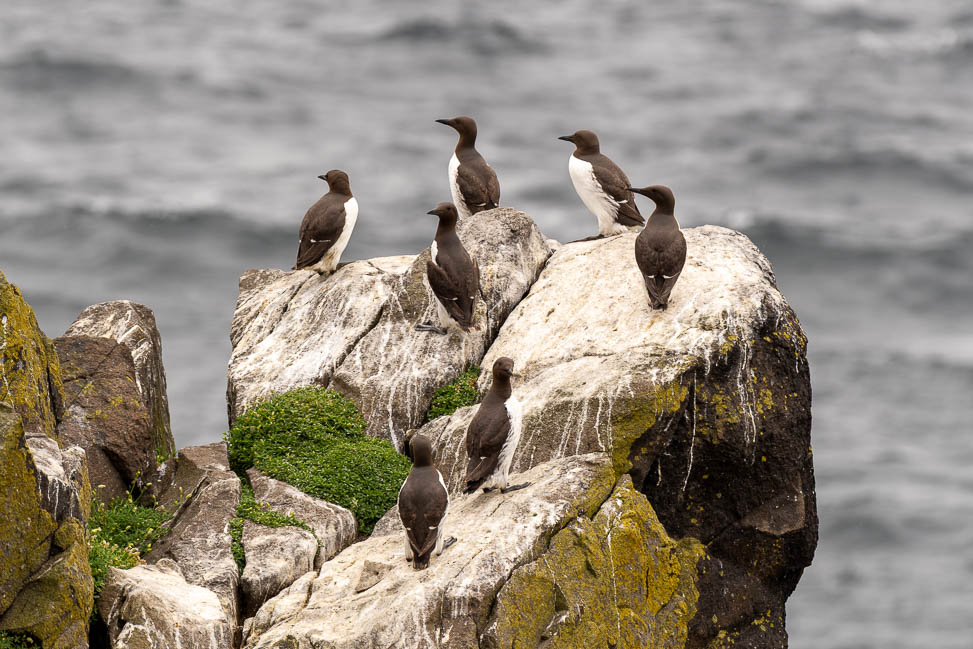
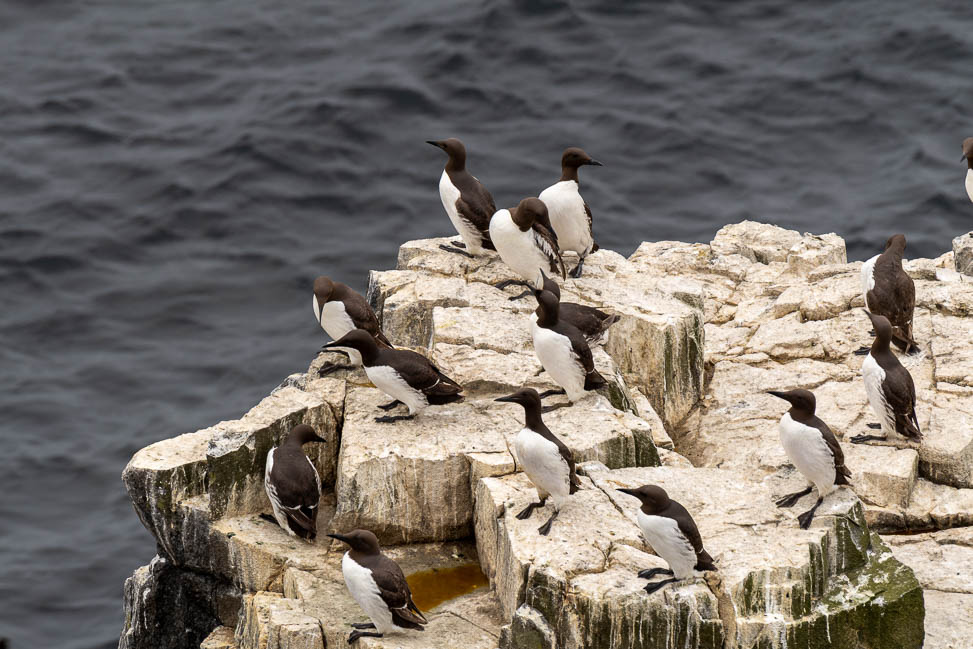
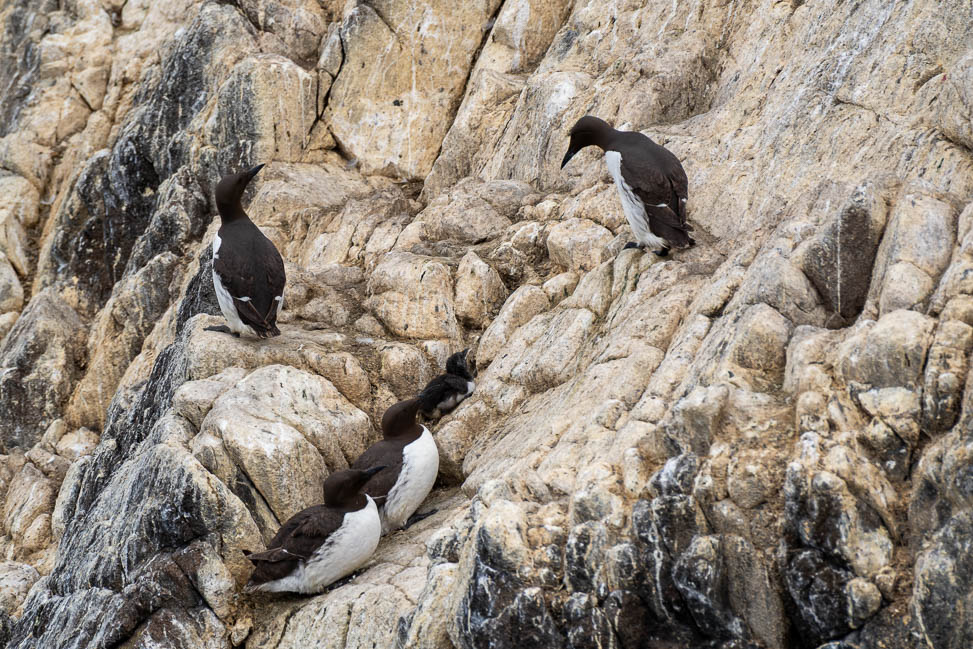
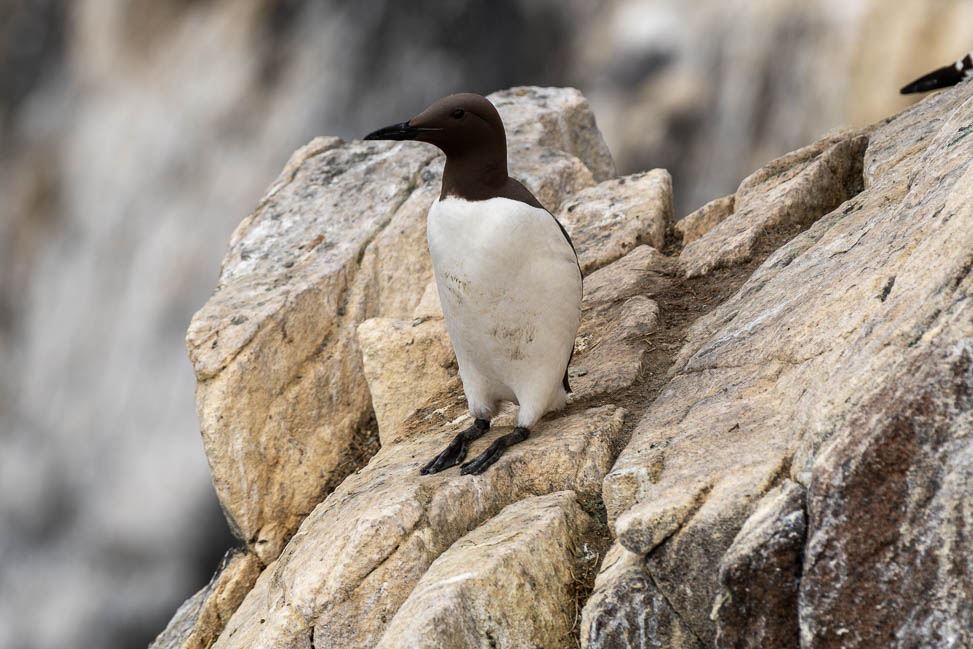
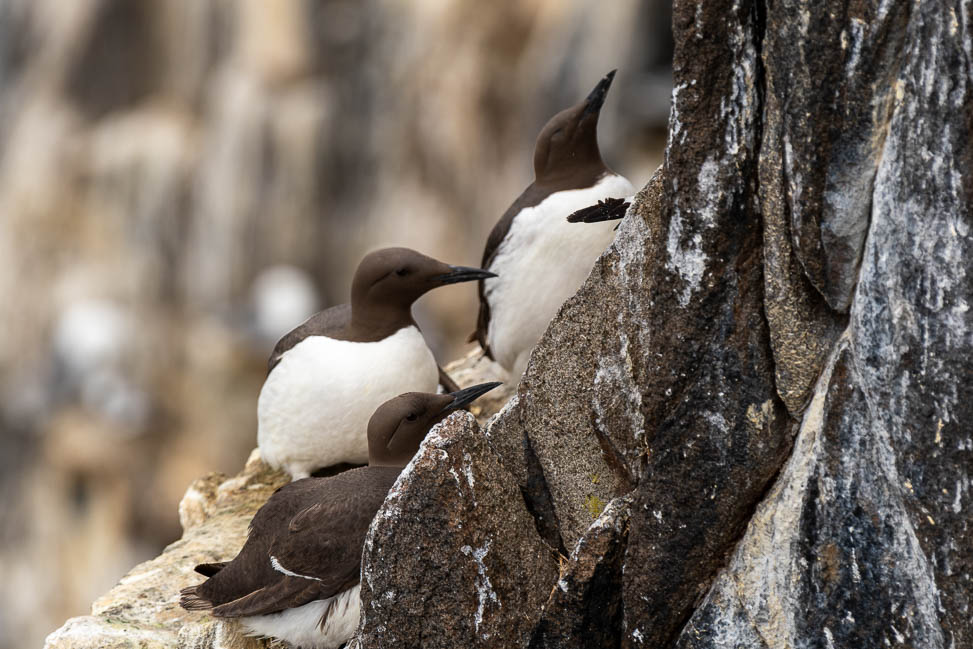
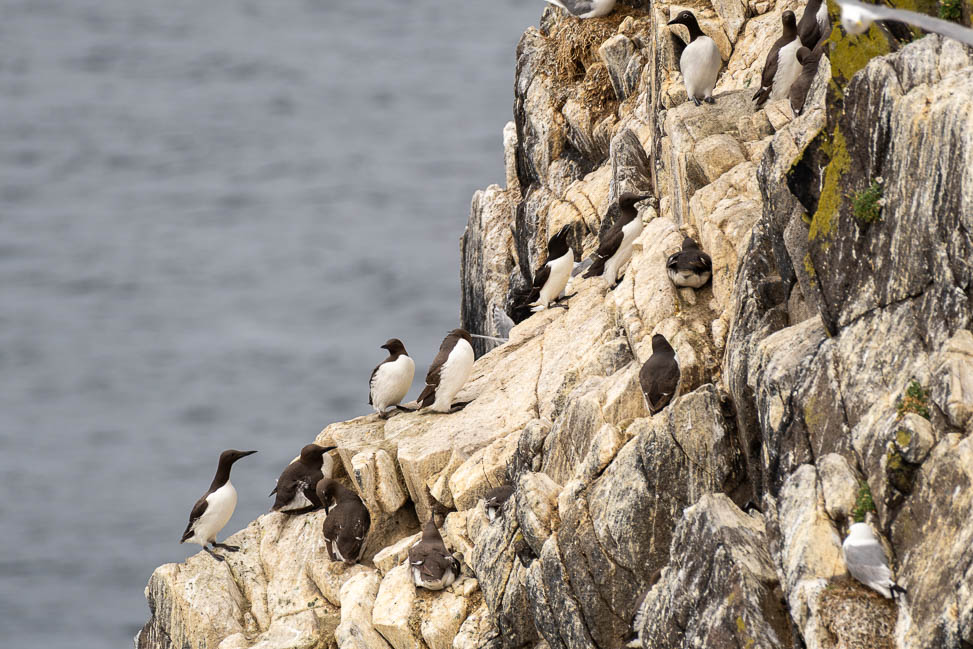
- Guillimot. Dark brown back and head with white strip behind the eye, slender pointed beak
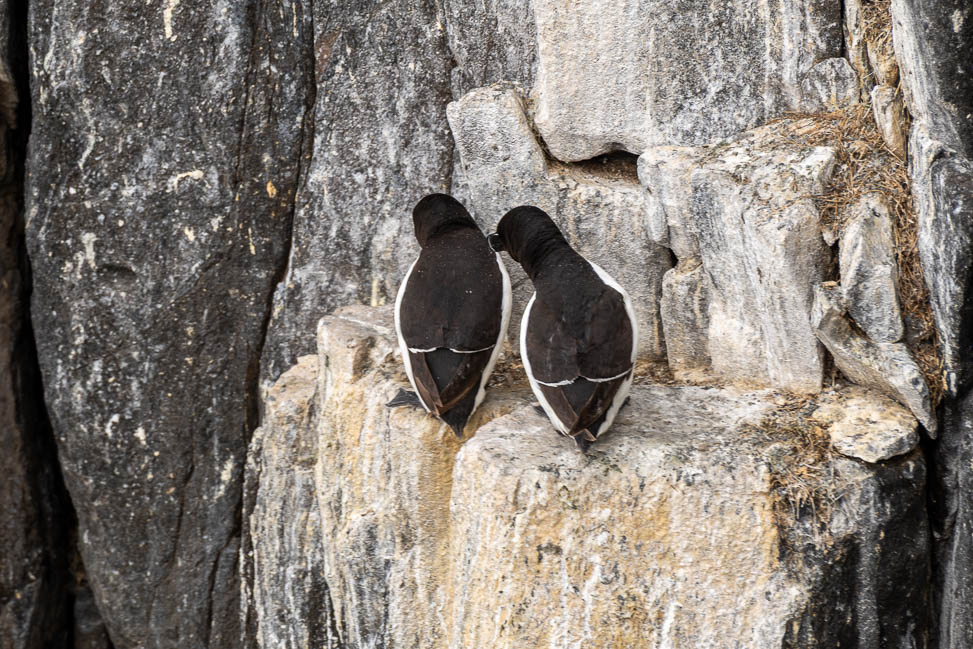
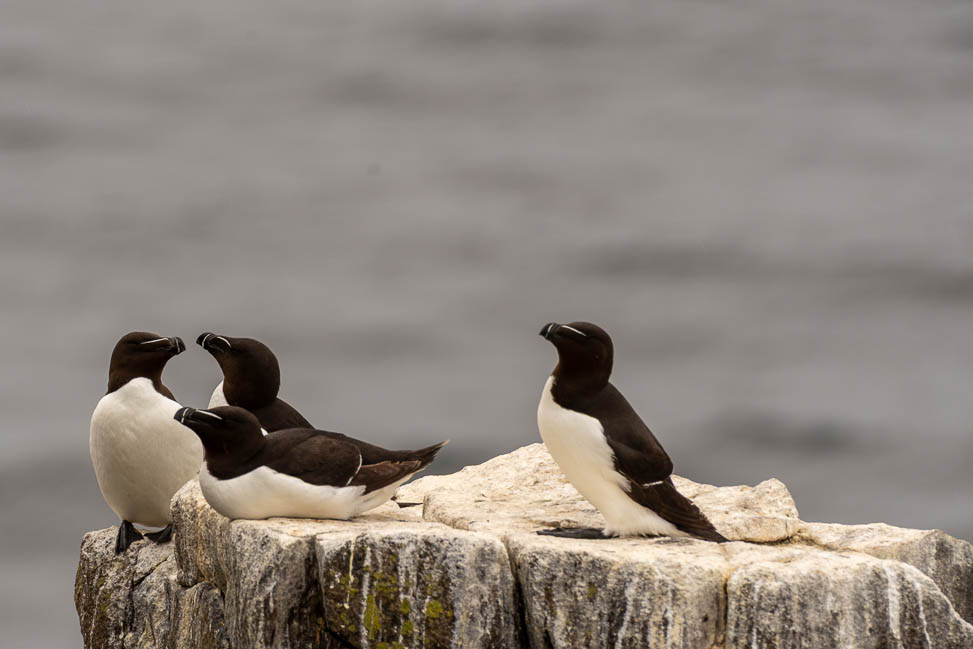
- Razorbill. Black back and head, heavy beak with white stripe
Photography note
Images were taken mostly at ISO 200, with some at ISO 400. The maximum f-stop used was f8, but most were taken at f5.6, f6.3 and f7.1 to get an image with sufficient focal depth but also bokeh reducing the background detail.